

20 Best Employee Recognition Apps in 2026 (We’ve Tested 50+)
We tested 50+ platforms hands-on. Here's what actually stood out (and what disappointed us).









The best employee recognition platforms do more than send digital gift cards. They connect peer-to-peer shoutouts, manager-driven awards, milestone celebrations, and performance incentives in one place, making it all feel natural enough that employees actually use it.
To help you cut through the noise, we evaluated more than 50 vendors against criteria that matter in practice: ease of adoption, recognition variety, reward flexibility, integration depth, and total cost. More than half didn't make the cut. This guide curates the top employee recognition platforms. Each is reviewed for key features, best use cases, pricing, and limitations, so you can find the right fit for your organization’s size, culture, and budget.
To select the tools in this guide, our team followed a structured vetting process centered on direct platform access.
- How we tested: For every platform that passed the initial screening, we requested a live demo and, where possible, created accounts to test the product hands-on. We evaluated each tool from at least two user perspectives: an admin setting up and managing a recognition program, and an employee giving and receiving recognition. Where trial access was available, we walked through the full recognition flow, drafting and sending recognition, redeeming rewards, navigating the analytics dashboard, and adjusting program settings.
- What we assessed: We scored each platform across dozens of factors. The ones that carried the most weight were peer-to-peer recognition quality, reward flexibility, ease of adoption, integration depth with HR software and team communication tools, and total cost of ownership, including hidden fees and minimums. We also collected feedback from HR professionals and employees who use these tools daily in their organizations, which informed our pros/cons and real-world usability notes.
- How we narrowed the list: We started with more than 50 vendors. Platforms were disqualified for failing to meet baseline standards, including insufficient recognition variety, poor mobile experience, opaque pricing without justification, or lack of meaningful analytics. Of the vendors that remained, 17 stood out clearly enough to earn a full review.
- A note on recency: Recognition platforms change frequently. We update reviews on a rolling basis as vendors release new features, change pricing, or receive notable user feedback. Each review is then refreshed accordingly.


Awardco

In our testing, Awardco stood out for its commitment to inclusive recognition, specifically for teams where deskless or offline workflows are the norm. AwardCodes—physical, scannable tokens—and Digital MemoryBooks allow for tangible keepsakes that reach the employees most software vendors typically ignore. The thoughtful localization (understanding that recognition means different things in different cultures) showed they'd done actual work rather than assuming one-size-fits-all.
PROS
- Public feed and AwardCodes make recognition simple, visible, and inclusive across the organization
- Intuitive interface available in 16 languages
- Integrates natively with Slack, Microsoft Teams, major HRIS systems, and HubSpot
- Amazon Business integration, huge reward catalog for a multitude of countries.
- The platform is available in English, Spanish, French, German, Japanese, Portuguese, and Simplified Chinese.
CONS
- No free trial available
- Gift card rewards are exclusively sourced through Amazon Business, limiting catalog flexibility
- Some users report that reward prices are inflated compared to standard retail rates
- Reward delivery can be delayed
- Actual pricing is not publicly available, so getting started won’t be a quick and self-service process like with other companies in the space.
- With Awardco, digital and physical gift cards are ineligible for refunds.
- Only Amazon-delivered products are available from Awardco. Goods sold by third-party vendors on Amazon are not available.
- The Awardco mobile app is only available as a Progressive Web Application, not from the App Store or Google Play, which might be less intuitive for some users.
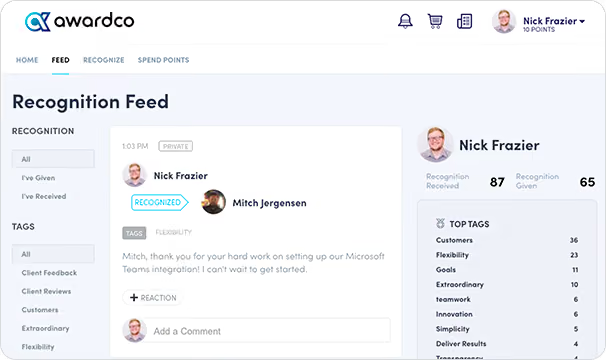
Awardco makes it easy to recognize anyone in your organization for living your values, achieving goals, or simply for being awesome employees. In our testing, it was easy to choose who to recognize, for what, and why.
We’ve also liked the social component, featuring all given recognition on a public feed for everyone to see. Awardco also facilitates remote employee recognition programs through integrations with communication tools like Slack and Microsoft Teams. This boosts engagement further, bringing recognition to platforms your employees already use.
We appreciate Awardco's inclusive approach to recognition. Their newly released feature, AwardCodes, makes it possible to give recognition offline to employees without regular computer access, so they aren’t left out of any appreciation efforts.
Managers provide customized award codes, which employees later scan to receive their rewards. The codes work for any employee, anywhere, anytime, while still enabling tracking and security.
Another thing that caught our attention is Awardco’s service anniversary features. Its level of gift creativity and personalization is something we’ve not seen on other platforms. Employees can create Digital MemoryBooks, which collect teammate contributions into a cherished keepsake for coworkers celebrating milestones.
The employee recognition vendor also has curated gift packages called Bonus Boxes that staff can put together and ship right to the doors of their coworkers to make their day.
However, we would have appreciated this recognition software more if it provided a greater variety of gift card vendors other than Amazon. A few users have reported that prices on some rewards are higher or inflated compared to retail prices, and there have been occasional delays in the delivery of rewards, which is disappointing.
Awardco reports over 3 million users across its platform (per company-provided data, May 2026).
Awardco offers two main plans for small and medium businesses.
- Lite provides basic automation for things like service awards, birthdays, and reporting. It establishes a foundation for employee recognition and costs $2,500 per year.
- Go includes everything in Lite plus additional features like peer-to-peer recognition, manager recognition, value-driven rewards, and budget oversight. It is more robust for employee appreciation and costs $4,000 annually.
- Custom for enterprises with more complex requirements.

Best For
Awardco is best for multinational companies scaling globally where you need recognition to work regardless of email access or digital comfort, and where personalization across cultures matters.

We use Awardco for recognizing our employees for anniversaries with the company, birthdays. And personal anniversaries. We also allow supervisors to go in a recognize high performers.
- It keeps track of and sends gift cards for employee birthdays.
- It lets us supervisors highlight high performers.
- It makes employees feel recognized and us to gift them a small gift of appreciation.
Our office subscribed to Awardco to help with our retention issue. Although we had a good culture, talent is still hard to retain in this market and we wanted our employees to feel appreciated and want to continue working here.
There really is not much we dislike. This is the only service we have seen that’s been able to boost morale the way it has.
I am not sure of any competitors in this market
If you’re looking to boost employee moral this is a great tool and we have seen a big trend upward in our retention. We were hesitant at first to spend money on an award system but we are glad we did.
I’m not sure of any changes since we have started using it.
This is great for any company that has more than 30 or 40 employees and would like to recognize employees
Small business that you could easily track what Awardco tracks, or a company not wanting to spend money on employee recognition.

Nectar
The defining feature we observed in testing was Nectar's ability to execute straightforward peer recognition without the friction. While most platforms just track points, Nectar's analytics layer surfaces cross-team collaboration patterns and reveals exactly where recognition gaps exist within the organization. Its lack of complexity also means higher adoption than more feature-heavy alternatives, keeping the focus on building daily habits.
PROS
- Extensive rewards, including personalized options.
- AI-powered internal communication tool with drag-and-drop editor and announcement templates.
- Consistently delivers user-requested features and product enhancements.
- A points-based system encourages peer-to-peer recognition.
- Discounts for companies with 500+ employees.
- Regularly introduces new features and enhancements to its products.
- Volume discounts available for organizations with 500+ employees.
- You pay for the rewards that are claimed. Points and allowances that remain unused won’t cost you a dime.
CONS
- There are no free trials at this time.
- The reward options are centered around gifts/gift cards, not experiences.
- It no longer discloses its pricing. A $4,000 minimum annual commitment is required.
- The priced plans are not available to start off as a self-service process. You’d have to book a demo and pay to access some of the premium features.
- The rewards selection could feel limited to some teams, especially those looking for more experiences in offer.
- No longer offer a free plan.
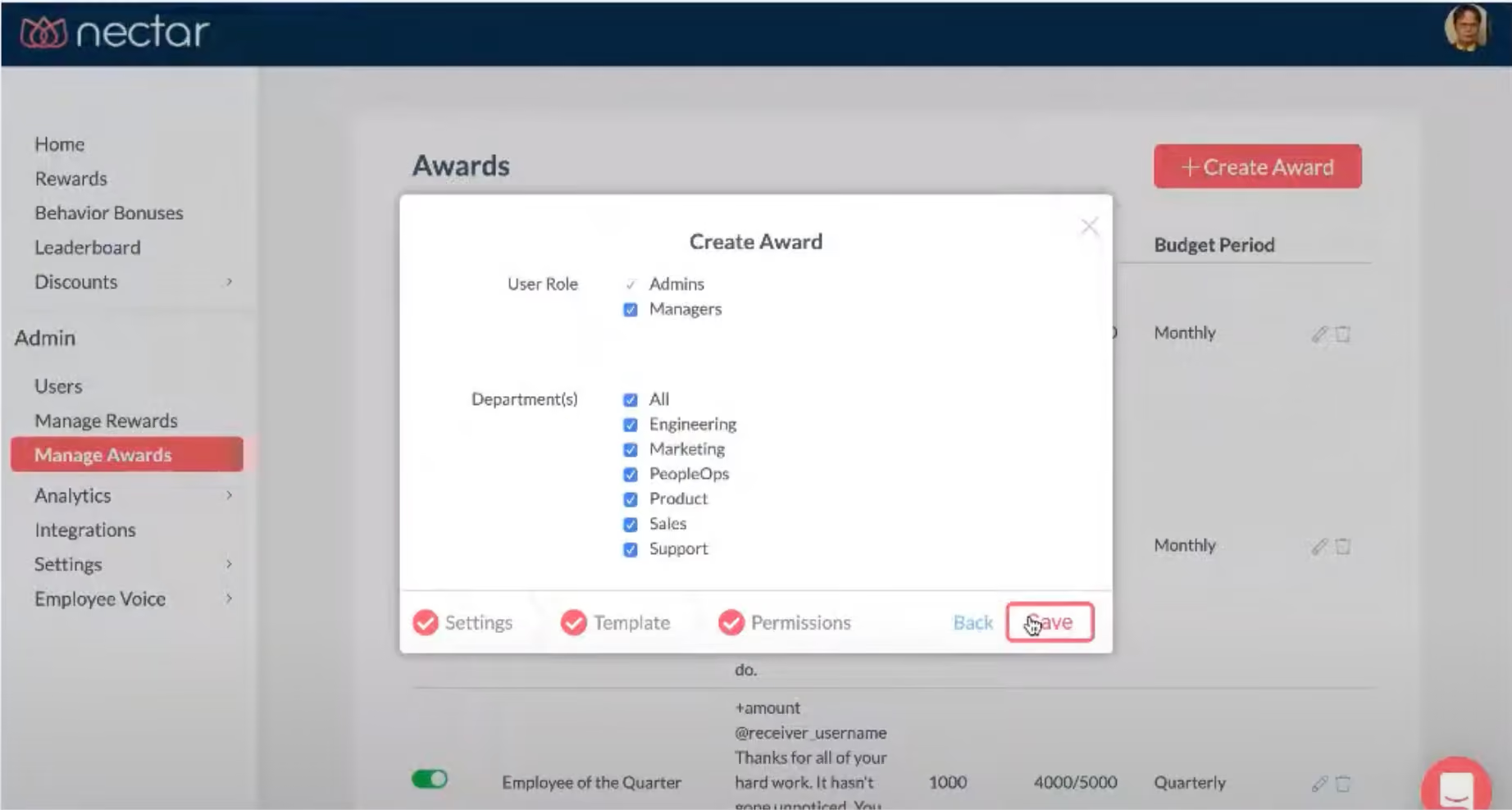
Nectar offers a robust yet easy-to-use solution for peer-to-peer recognition that is aligned with company values. We like how its points-based system empowers all employees, not just managers, to reward coworkers' accomplishments and behaviors.
Peer-to-peer shoutouts are shared for everyone to see via a centralized feed. As for rewards, we’ve found Nectar’s catalog to be quite comprehensive, covering several options like Amazon purchases, gift cards, charitable donations, and company swag. Employees can quickly redeem their recognition points for rewards they value. Alongside peer bonuses, Nectar supports performance-based rewards and spot bonuses from managers.
The employee recognition platform company also offers wellness features and impactful new capabilities like network analysis, which provide HR teams with visibility into cross-team recognition patterns. As a distributed team ourselves, we found the newly added internal communication tool absolutely a delight to foster transparency and help everyone stay informed.
When looking at pricing models, however, we found Nectar’s $4,000 minimum annual commitment to be higher than some competitors like Awardco’s $2,500. Compared to our last review update, it no longer discloses its pricing. And unlike Guusto or Connecteam, Nectar doesn’t provide a free trial, which makes it even harder for smaller organizations to give them a go.
Nectar is used by many recognizable brands, including Redfin, Golden State Warriors, Major League Baseball, and SHRM.
Nectar offers three pricing plans with an annual commitment of $4,000. While the recognition program vendor continues to provide three options—Plus, Premium, and Custom—it no longer publicly shares its pricing information. However, based on our research, the starting price may range from $5 to $6 per monthly employee when billed annually.
Best For
Nectar is best for mid-market companies (50-2,000) wanting clear peer recognition with visibility into collaboration patterns, without needing complex customization or additional features.

We have managers give recognition at least once a week. Employees use it to get items with their points. They also like to have another way to communicate with each other.
We like the user-friendly platform. They have great customer service. Our employees are able to use their points towards stuff they enjoy.
We purchased it to engage employees and give recognition. We love the idea of employees giving positive feedback to each other. Our employees wanted to be able to give each other recognition as well. We used it for 2.5 years.
Nectar took a while to implement. Our employees would like to see additional / new options to purchase with points. Notifications to employees didn’t always work.
They are very similar to competitors. Their gift selection seems smaller then others.
Consider time of implementation. Make sure that your team uses it on a regular basis. Give incentives for employees to give each other recognition.
They are always making updates to improve. They have improved the overall design of the app.
Larger companies that aren’t able to recognize and acknowledge every employee all the time.
Small companies that interact every day.

Bonusly
Bonusly isn't trying to be everything, which is actually its strength. No overwhelming workflows, no excess complexity. The public feed ensures that every shoutout is visible, which employees consistently told us was the reason they actually used it. By providing monthly point allowances, the platform creates a natural rhythm where recognition becomes a recurring habit rather than an occasional gesture.
PROS
- Simple, intuitive interface that's easy for both managers and employees to use
- Available in English, German, French, and Spanish
- Mobile app available for iOS and Android
- Discounted pricing for nonprofits and educational organizations
- Full-featured 14-day free trial
- Intuitive user interface.
- Available in German, English, French, and Spanish.
- Supports Android and iOS.
- Discounts for nonprofit and education organizations.
- 14-day, full-featured free trial.
CONS
- Core plan is capped at 50 users, limiting scalability for growing small businesses
- Analytics and reporting are basic with limited scope and customization options
- Reward catalog skews toward gift cards, cash, and donations. Experiential rewards are largely absent
- Unused bonus allowances do not roll over at the end of each period
- Analytics and reporting features are relatively underdeveloped.
- The reward catalog lacks in-person experiences and physical goods.
- All our plans are billed annually, and the vendor no longer discloses their pricing.
Bonusly’s recognition-first design is where the platform shines. By making appreciation a daily habit, not just a quarterly or annual gesture, it stands apart from traditional rewards catalogs that emphasize transactions over connection.
Employees receive monthly point allowances to recognize peers, helping keep appreciation active across departments. The process is quick and engaging: pick a teammate, assign points, add a message, and optionally include GIFs, hashtags, or even a short video.
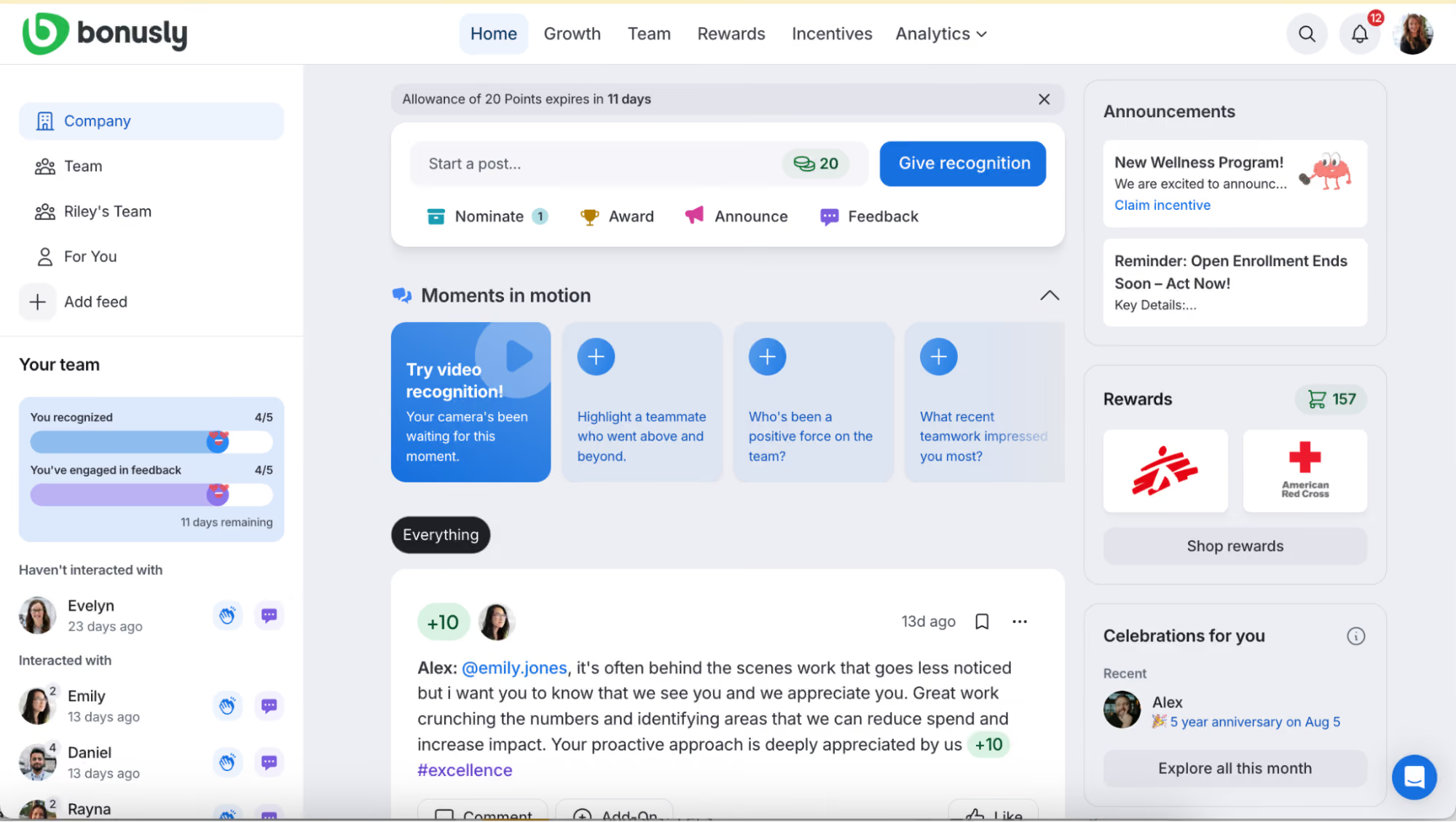
We especially appreciated Bonusly’s public recognition feed, which surfaces all peer-to-peer shoutouts in one visible stream. It encourages participation and makes appreciation more tangible. And we can imagine managers would like this visibility too, as it helps them gain real-time insight into team dynamics and individual contributions.
In addition to recognizing achievements, users can send timely messages for birthdays, work anniversaries, and other special occasions thanks to Bonusly's automated reminders. The tool also integrates directly with Slack, Microsoft Teams, and leading HRIS systems, so recognition flows naturally into the tools your team already uses.
Recent updates have made Bonusly feel even more intuitive and customizable. Now, with Slack and Microsoft Teams integrations, you can give recognition with just one click and see real-time previews. Admins gained new controls to customize recognition policies, and provisioning tools have been improved, too. The employee recognition platform also introduced structured 1:1s with shared agendas, lightweight check-ins for alignment, and automated performance recaps that highlight contributions over time, not just recent ones.
However, if your team prefers experiential rewards, you may not be a huge fan of what Bonusly currently has to offer, as from our assessments, this vendor’s available reward options focus mainly on point-based gift card rewards and curated physical gifts.
In addition, Bonusly requires annual billing across all plans. Lastly, some users we spoke with reported occasional reward redemption issues or brief platform outages – nothing deal-breaking, but enough to warrant extra diligence during implementation.
Bonusly reports serving over 3,400 customers (per company website, verified May 2026).
Bonusly provides a 14-day free trial and three subscription tiers: a Free tier for up to 8 users with core recognition features; a Team tier at $3/user/month (or $30/user/annually) which adds habit-building functionality for growing teams; and an Organization tier (custom pricing) that includes advanced analytics, deeper integrations, and enterprise controls for larger companies.
Best For
Bonusly is best for small businesses (50-500) wanting straightforward peer recognition without complex integrations, where simplicity directly translates to adoption.

When using Bonusly, you create a post highlighting the recognition you would like to publicly share about a team member or team members. The post includes required fields such as @name(s) and #value(s).
If your company has points enabled, you can allot a specific number of points to gift using the +point(s) field.
Each team member has a set number of points they can give each month, and accumulated points received from others can be redeemed for gifts in a company store, if configured. At the end of each post, you have the option to include a GIF.
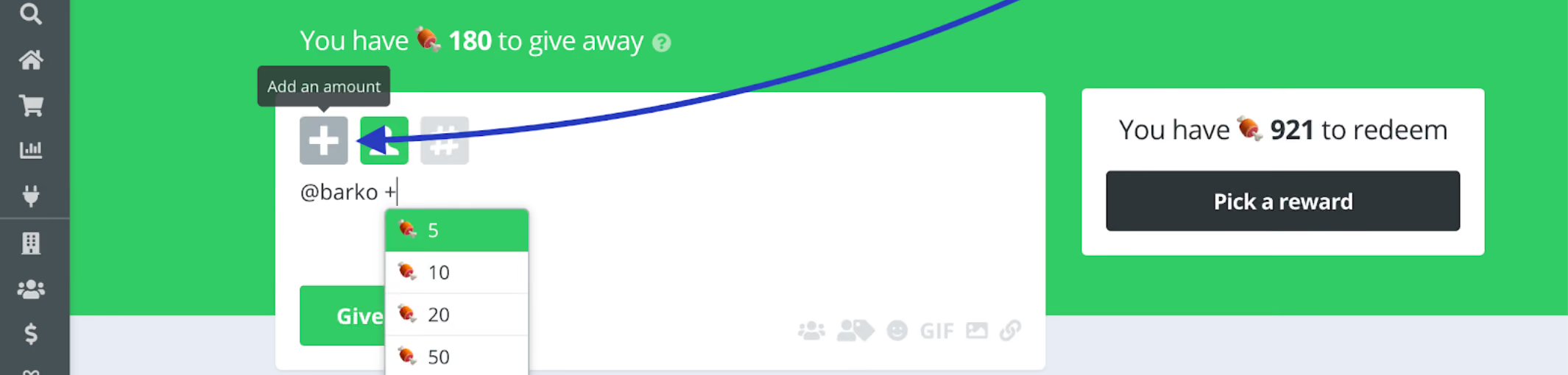
I like that the platform is easily accessible and intuitive for publicly recognizing team members in a visible way.
From an HR perspective, I like that I can track data showing which company values resonate most and least with employees, which helps leadership focus on areas that may need stronger reinforcement.
I also like that team members are incentivized to participate through a points and rewards system.
As our company began to scale as a globally distributed workforce across the US, EMEA, and APAC, we wanted to adopt a tool that could promote a company culture of recognition and appreciation.
Our teams were spread across multiple offices, so finding a tool that made recognition easily accessible in real time was important. We also believed that incentivizing team members to recognize others’ contributions through gamification would encourage broader participation.
To make it easier for team members to think through their recognitions, we created hashtags aligned with each of our core company values. This allowed us to collect measurable data to track which values resonated most with team members and identify areas where leaders could lean in more and lead by example.
I have personally used the tool for over three years.
It would be helpful to filter public recognition posts using more advanced criteria, particularly when reviewing usage by teams or functional groups.
At the time, the integration with our company swag store was not very user friendly, though improvements may have been made since then. An easier integration with Zenefits would also be beneficial.
I have not used similar tools to Bonusly, so I cannot directly compare it to competitors.
One key consideration is weighing the pros and cons of both adopting the tool and gamifying recognition. Gamification introduces factors such as budget constraints and the risk of misuse by team members acting in bad faith.
Another consideration is whether a platform like Bonusly will support your intended outcomes, such as improving company culture, morale, or engagement.
The platform has become more intuitive to use over time. Integrations with HRIS systems like Gusto have made importing new hires into the platform much more seamless.
It works well for distributed workforces, whether remote, in person, hybrid, or global. Organizations focused on strengthening engagement and building a culture of recognition and appreciation are likely to see strong value from this platform.
I believe Bonusly can work for any organization that wants to improve or reinforce a culture of recognition and appreciation. The tool is intuitive and can motivate team members by highlighting the contributions of others across the company.

ITA Group
ITA Group connects recognition to engagement strategy in ways most platforms don't. Recognition ties to surveys, challenges, company goals. Nomination-based programs (employee of quarter) create structure. Physical certificates you can mail show they understand recognition needs to feel real, not just digital. This positioning works well for organizations treating recognition strategically.
PROS
- User-friendly interface makes giving and receiving recognition quick and intuitive
- Seamless Slack integration consolidates posts and kudos in a single feed
- Diverse reward catalog spans donations, experiences, merchandise, and more
- Mobile apps available for both iOS and Android
- Full platform for all things employee engagement, not just rewards and recognition.
- The Slack integration is very seamless. Challenges, posts, and recognitions can all be gathered within dedicated channels in your team’s Slack workplace, if you want to.
- Wide variety of rewards including a team store, donations, entertainment, travel experiences, merch, products, and restaurant coupons.
CONS
- No gamification features for recognition at this time
- Customer support is only reachable via online form; no live chat or phone
- Pricing is not publicly disclosed and no free trial is offered
- Some users report login and SSO issues on the mobile app
- For some of the workplace culture-building features, like challenges and activities, you can’t create your own, so you rely on how often Cooleaf’s team makes them available.
- We found the support center’s documentation to be somewhat limited in comparison to similar tools. Also, it seems like support is only done through an online form, no other channels are available.
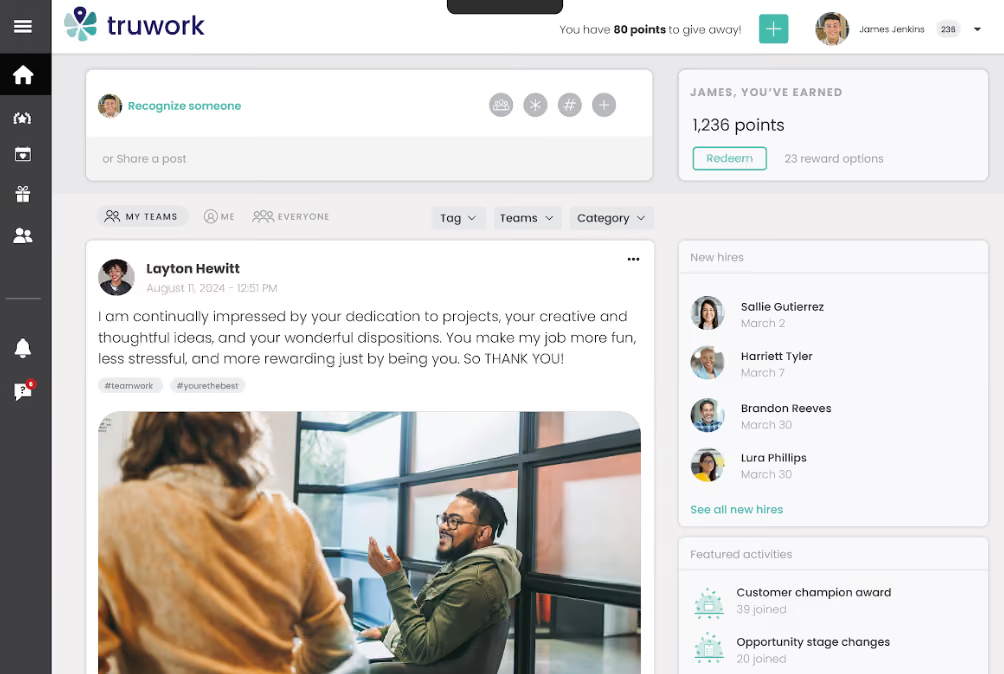
ITA Group (formerly Cooleaf) stands out in the crowded recognition space by offering a strategic, data-informed approach to employee appreciation. It’s not just a peer-to-peer shoutout tool—it’s a full employee experience platform that we found particularly effective for large, dispersed organizations (2,000+ employees) that want recognition embedded into company culture.
During our test, we appreciated how ITA Group sends weekly nudges to managers, showing how well their teams are giving and receiving recognition. This helps identify teams and team members that might be disengaged before it becomes problematic. Unlike lighter recognition tools, ITA Group supports nomination-based programs like “Employee of the Year” with configurable approval chains. This structure ensures consistency in more formal award programs.
Recognition in ITA Group isn’t isolated—it connects directly to performance incentives, survey participation, and engagement challenges. One new feature we found surprisingly impactful was the ability to print and mail physical certificates. These tangible tokens can carry more weight than a digital badge for remote or hybrid employees.
Compared to simpler solutions like Nectar or Assembly, ITA Group offers more depth in its analytics and engagement tie-ins. Its custom reporting tools allow organizations to track recognition activity across teams, roles, and regions, giving HR leaders data they can act on. That said, we found that some of the platform’s more advanced workflows required admin setup support, especially during implementation.
Still, if you’re looking for recognition software that does more than hand out praise, ITA Group is among the most complete platforms we’ve tested in this space.
ITA Group is used by organizations like Acosta, Aprio, BlueLinx, Georgia’s Own Credit Union, Kids2, and Shipt.
ITA Group offers custom pricing based on the number of employees participating in the program.
- Subscription billed monthly
- Separate budget allocated for rewards (flexible per organization)
- Implementation and onboarding support included in most plans
Since our last review, ITA Group has rolled out approval-based recognition workflows, manager usage reports, and printable certificates that reflect a stronger focus on scalable, structured programs. We also liked new community features such as employee follows and in-platform new hire announcements.
Best For
ITA Group is best for global distributed teams (2,000+) wanting recognition integrated with broader engagement and goal-setting initiatives, not as a standalone tool.

I was never an administrator of Cooleaf. I used it as an employee. Salesloft would create different challenges to get employees involved and communicate with one another remotely. Once employees received a large amount of Cooleaf points they were able to use those points to get gift cards to many different options.
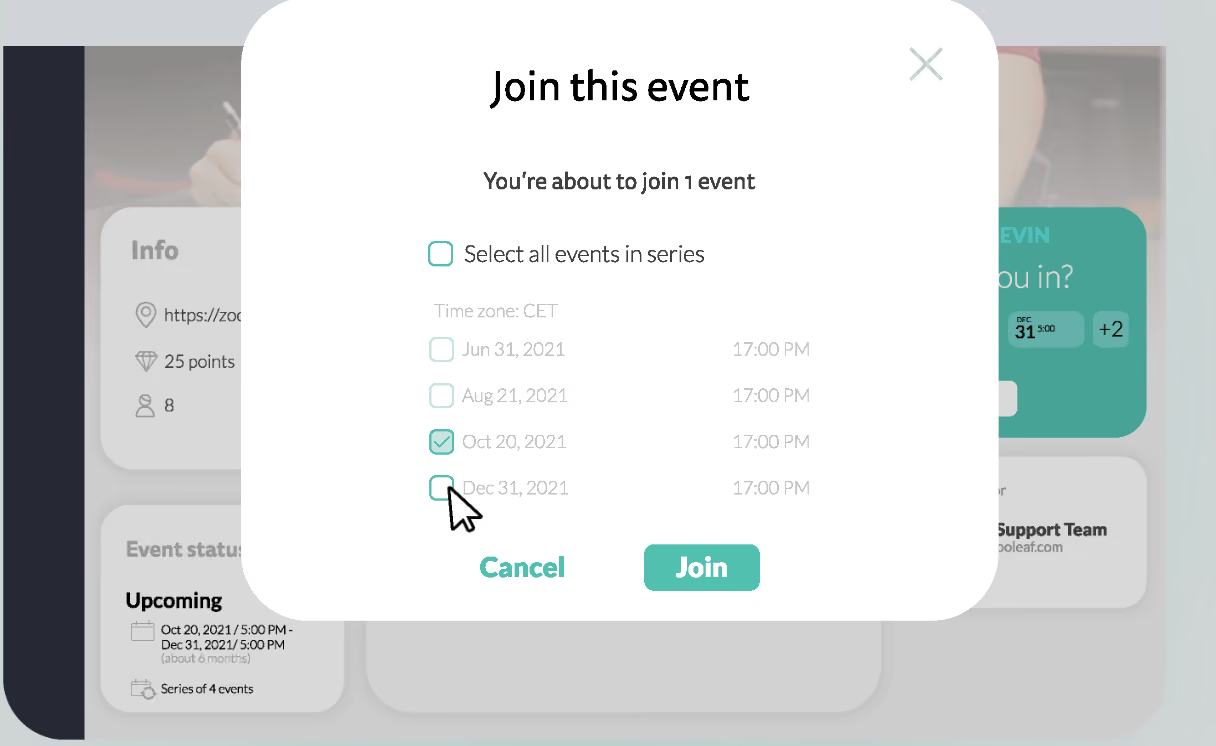
- Cooleaf is a great tool that encourages amazing work collaboration.
- It has partnerships with multiple great companies so users can get some really great gift cards.
- Cooleaf is very easy to use, and has great customer support.
I used Cooleaf at Salesloft for about 1.5 years, as they were trying to create an extremely inclusive workplace and it was a great way to collaborate remotely globally. Cooleaf was used to make people feel special and feel like they were being rewarded at work. It has a lot of partnerships with multiple different companies.
- At times it became an extra step in employees' workflows so I think they stopped wanting to do it.
- Employees were pigeon held to the challenges the companies created so sometimes there was a lack of creativity or diversity.
- To get a large gift card/ reward payout often takes a longtime.
I have not used a tool similar to Cooleaf. I think if you are a large organization with the majority of your workforce remote, Cooleaf is a great option.
I think that the total cost of the product is definitely an investment for companies. In order to ensure usage of the product companies must come up with diverse Cooleaf challenges that target a wide range of the organization.
Cooleaf has added many different companies that they partner with for gift cards which definitely makes the product more attractive.
A company that has a majority of their workforce working remote.
Small organizations or companies that have the majority of their employees working in the office or companies that do not provide laptops for their employees.

Teamflect
Teamflect distinguishes itself by weaving recognition into the fabric of performance and feedback cycles. By facilitating automatic recognition for staff identified during reviews, surveys, and feedback, the tool ensures that gratitude is a key component of professional development. Plus, its specialized design for the Microsoft Teams ecosystem provides significant utility for organizations deeply embedded in that environment.
PROS
- Integrates with Microsoft 365 and over 200 HRIS providers, connecting recognition with performance and feedback workflows.
- Connects recognition to reviews, surveys, and feedback using People Picker questions.
- Accessible directly within Microsoft Teams chats and Teamflect workflows.
- Offers customizable recognition badges and point systems.
- Includes reports tracking recognition activity across teams and individuals.
- Provides enterprise security features and flexible deployment options for larger organizations.
- Operates entirely inside Microsoft Teams; no separate login or interface required.
- Supports 30/60/90-day onboarding reviews, quarterly cycles, and exit interviews, and more with customizable templates.
- Pulls in real-time data like OKRs, 360 feedback, survey scores, and development plans into review workflows.
- Includes nine-box talent grid for potential vs. performance mapping.
- Enterprise-grade reporting and analytics via Power BI Connector for deep workforce insights.
CONS
- Teamflect is built around Microsoft Teams and Outlook, making it a weaker fit for organizations using other workplace communication platforms.
- The main recognition feed does not provide the same built-in AI drafting assistance available through Teamflect Agent.
- While fully accessible on mobile devices, Teamflect lacks dedicated mobile apps.
- No support for payroll, benefits, or core HRIS.
- While data is real-time with an API integration, in Power BI, it’s refreshed every 3 to 5 hours, meaning insights may not always reflect the most current information.
- Best value is limited to Teams-centric companies; not usable as a standalone platform.
Rather than treating recognition as a standalone social activity, Teamflect takes an interesting approach by enabling organizations to build it into the performance and feedback processes they already run. And this was also the feature that stood out most to us in the demo.
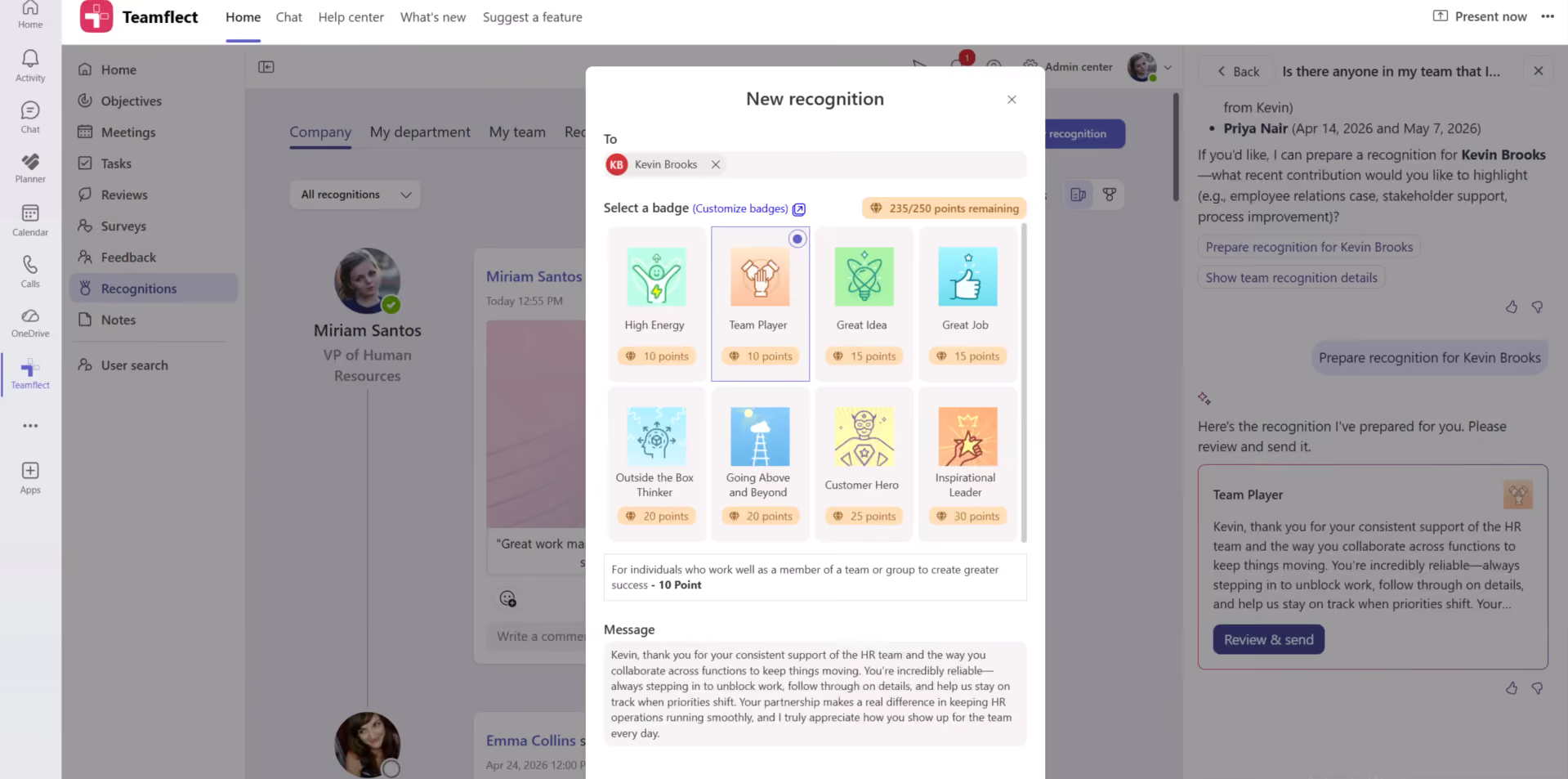
HR teams can add a People Picker question to a review, survey, or feedback form so respondents can select colleagues who contributed to their work. Once the form is submitted, Teamflect can automatically send recognition to those selected employees. That creates a direct link between feedback and appreciation. For example, an employee can identify a peer who helped with a project during a feedback cycle, and that person can receive recognition without a manager having to follow up manually.
We think this is particularly useful for organizations trying to make recognition more timely and less dependent on managers remembering to do it. It also gives HR teams a practical way to reinforce positive behaviors identified during 360-degree feedback, project reviews, pulse surveys, or monthly recognition programs. The recognition then becomes part of the broader performance record rather than an isolated "kudos" moment.
As an official Microsoft partner, Teamflect’s position within the Microsoft ecosystem is an important part of its overall value. Employees can send recognition directly in Microsoft Teams chats, and it also appears across Teamflect's meetings, team pages, employee profiles, and recognition feed. Because employees can participate within the tools they already use every day without switching platforms or creating another account, organizations can achieve high adoption rates. Consequently, Teams and Outlook users get substantially more value from Teamflect than organizations using other workplace communication tools do.
Also, having the AI agent identify employees who may have been overlooked for recognition and draft messages, while points can be exchanged for rewards from a customizable catalog, rounds out the experience.
One usability detail we noticed is that the AI drafting assistant, while available in Teamflect Agent, is absent from the primary recognition composer in the social feed. This creates a slight functional gap when users are crafting kudos posts. Furthermore, Teamflect's deep integration with the Microsoft ecosystem means organizations on other communication platforms will find less utility in it. This Microsoft-first approach is also evident in the lack of dedicated mobile apps; while the tool is accessible on mobile browsers, the experience remains heavily geared toward desktop and Teams-centric workflows.
Securitas, DHL, Nevada County, Invacare, Roberto Cavalli, Meyer Werft, Espyr
Teamflect provides a free Starter plan (up to 10 users), an Essential plan ($7/user/month for analytics and premium support), and a Professional plan ($11/user/month for talent management and advanced integrations). Larger organizations can request the custom-priced Enterprise package, which adds advanced security, infrastructure, governance, implementation, and support options. Paid plans offer 30-day free trials, and nonprofits save up to 60% on annual contracts.
Best For
Microsoft Teams-based organizations that want to connect employee recognition directly to performance reviews, surveys, and feedback.
Motivosity
The defining feature we observed in testing was the analytics layer. Most recognition platforms track what happened, Motivosity goes one step further—it correlates recognition patterns with HR data to surface which departments show recognition gaps and which teams have lower recognition rates tied to higher turnover. The peer recognition flow was also fast—under 30 seconds, which matters for adoption because friction kills usage.
PROS
- Intuitive mobile-friendly apps with straightforward features and easy integrations with Slack and Teams
- Free basic plan available for small companies
- Free trial offered on all paid plans
- Peer recognition and shout-outs are fast and easy to give
- Built-in analytics surface insights on attrition risk, top performers, and coaching needs
- Employees can access this system from their phones, desktop, and apps they are in at work such as Teams/Slack
- One platform that combines rewards, recognition, employee engagement, and more
- Built in reporting with insights around potential attrition, most recognized employees, managers that need coaching, etc.
CONS
- Monthly recognition budget is fixed meaning users cannot add funds mid-cycle
- Performance management features including 1:1s and coaching have been removed
- No controls over peer recognition point distribution, which can lead to uneven or biased allocation
- Pricing is not publicly disclosed and no free trial is available
- Only has dollar (not points) based rewards. Their research shows dollars is more effective, but many companies want points.
- Some users claimed sometimes it can be a bit buggy connecting to Slack to notify people that an appreciation came through.
- It would have broadened the number of gift card options for users to choose from.
- There could have been an easier way to integrate the software with swag stores. For now, you have to transfer funds to a card and then link that card with the swag store, which slows down a bit the process to cash in funds.
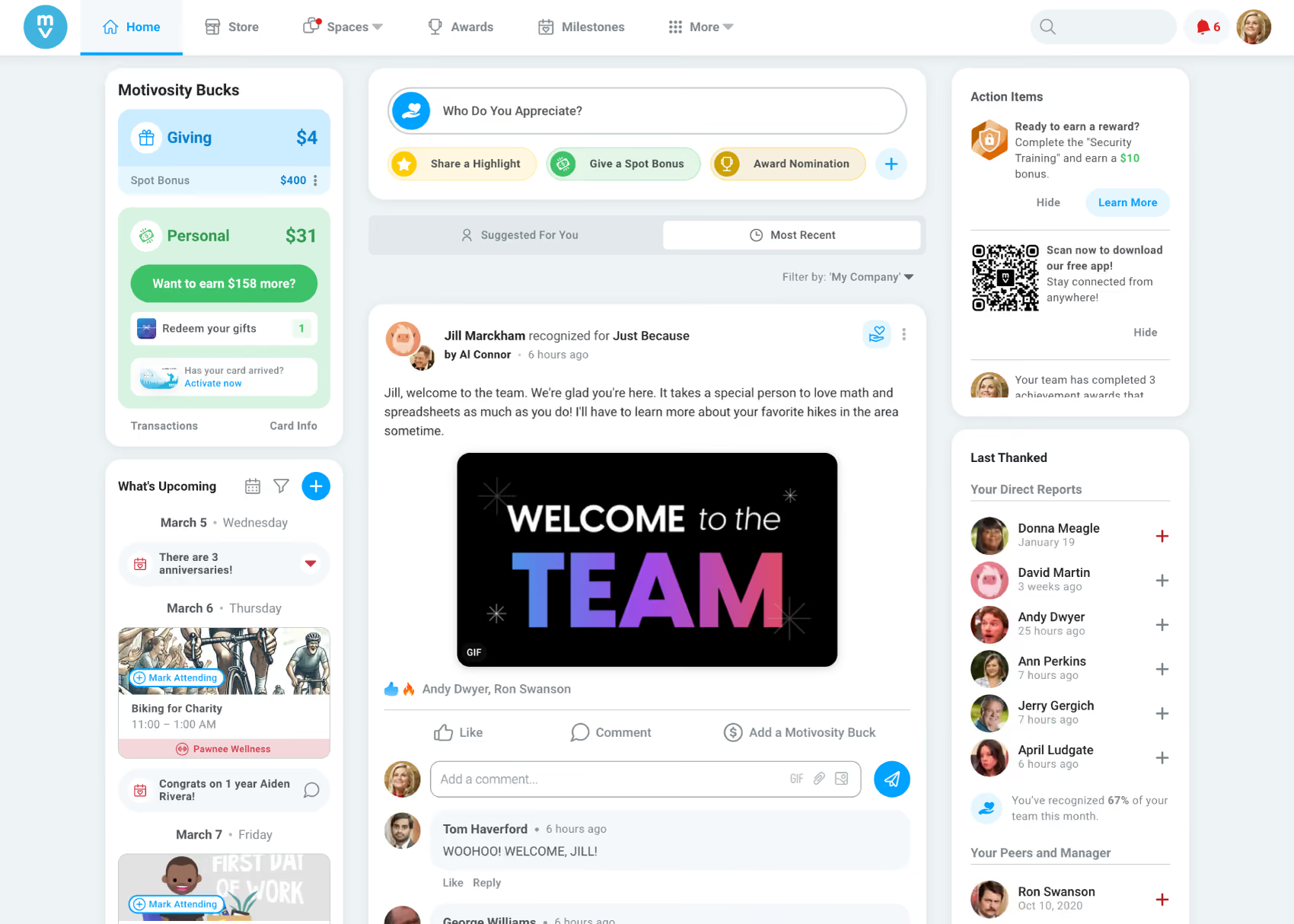
Motivosity takes employee recognition to the next level with its innovative peer-to-peer platform. We’ve given it a try and liked how easy it is to send shout-outs. We also liked how all shout-outs are posted on a customizable homepage, showing appreciation in real-time across the organization.
Motivosity's ThanksMatters digital cards empower employees to redeem their received recognition for Amazon gift cards, restaurant vouchers, or anything that appeals to them. The custom company store and integration with hundreds of vendors take care of all the logistics.
You can also use Motivosity to incentivize company-wide initiatives. We’ve found it easy to create custom badges and awards. It also does not forget about service milestones and birthdays. Individual gifts and peer celebrations through comments make employees feel valued on their special days.
However, it’s quite disappointing to find out that some good performance management features, such as 1:1s and coaching, are no longer offered. Additionally, Motivosity lacks controls over peer recognition point distribution, which can lead to favoritism or uneven allocation of points among employees.
A&W, Bosch, KPMG, Chick-fil-A, and Toyota are some of the companies that use Motivosity.
Motivosity offers its Recognition and Rewards package at $4 per employee per month, with a minimum annual spend of $3,000.
Best For
Motivosity is best for companies with 20-500 employees prioritizing peer-to-peer recognition as a core cultural tool, especially those where you can measure culture impact through recognition activity and need a platform that stays focused on that single job.

Motivosity was primarily used for its core strength: employee engagement. It became part of my day-to-day activities related to employee-focused initiatives and was especially relevant in departments like sales, account management, and customer service.
Since I was involved in the implementation and used the platform for only about three months, I wasn’t able to explore many of its advanced features. Nonetheless, it played a role in supporting engagement strategies and cultural initiatives during that time.
- Motivosity has an easy-to-use interface with a minimal learning curve.
- Its employee rewards features generally meet the needs of small to medium-sized businesses.
- The platform is excellent for building a more connected culture, especially across multiple work sites.
I used Motivosity in a previous organization, though only for a short period. Before that, we were primarily relying on a manual approach for employee rewards and needed a better system to streamline and scale our efforts.
For a small enterprise, Motivosity is an effective tool for fostering connectivity, and it provides clear benefits for companies aiming to prioritize employee rewards, culture, and automated engagement.
Our research focused on balancing cost and features, and we evaluated alternatives like Awardco and Kudoboard. Being a Utah-based company, the organization also leaned toward choosing a vendor located in Utah.
- Enterprise platforms like Workday often include built-in functionality that covers a majority of what Motivosity offers.
- Beyond its basic features, adopting more advanced functionalities can be confusing.
- The reporting tools feel clunky and are not very intuitive to manage.
Motivosity stands out for small to medium-sized businesses that don’t already have an integrated tool for rewards, connectivity, and culture. It delivers these features on a smaller budget compared to more comprehensive platforms. Having used both, I would choose Motivosity for a smaller organization with multiple locations looking for a straightforward solution to support employee engagement.
- Cost vs. Value: Determine how much you're willing to invest and which features are essential.
- Feature Prioritization: Consider how important tools like gamified “Motivosity Bucks” are to your organization.
- ROI Potential: Evaluate whether your business, especially in roles like sales or account management, would benefit from increased motivation and productivity driven by a tool like this.
Unfortunately, I can’t speak to this, as my experience with the platform was limited.
It’s well-suited for sales teams or any role that benefits from a structured system for recognition and motivation. It’s also a strong option for companies beginning to develop their employee engagement programs.
Motivosity may not be a good fit for large or complex organizations that require advanced, horizontally integrated systems. These companies often need custom solutions that go beyond what Motivosity offers. Alternatively, such organizations could pair Motivosity with other tools to fill those gaps.

Workstars
Workstars distinguishes itself by prioritizing peer connection over reward markups. Instead of treating rewards as a profit center, they enable non-monetary recognition—such as internal experiences and opportunities—avoiding the points gaming often seen in other tools. Their implementation model reflects this strategic focus; every client gets dedicated, high-touch onboarding, framing the relationship as a hands-on partnership rather than just another self-serve SaaS subscription.
PROS
- Recognition is tied to company values by default, reinforcing culture.
- Rewards can be internal, non-monetary, or processed through payroll, at no extra cost.
- Each client receives dedicated onboarding and training regardless of pricing tier.
- Customizable features allow full control over values, behaviors, and visibility settings.
- Management and executive dashboards provide real-time insights into recognition patterns.
- Custom rewards like service awards, top performer awards, nominations, voting, etc
- Cost-effective when compared to similar platforms.
- Culturally-aware; while based mostly in the UK and US, the Workstars team has been known to go the extra mile to adapt to the customs, expectations, and cost of living adjustments of clients in other parts of the world.
CONS
- UI feels less modern compared to sleeker competitors.
- AI features for recognition message drafting are still pending release.
- Customer service operates in UK and US hours only, which may delay responses for other time zones.
- The user interface appears less modern than some competitors.
- Support is limited to UK and US business hours, which could result in delayed responses for international users.
- Neither a free plan nor a free trial is offered.
Rather than following suit to the typical “more rewards = better engagement” formula commonly seen in the employee recognition space, Workstars stands out by centering on creating a culture of recognition rooted in company values and peer connection. From the start of our demo, we could tell this platform is built for HR teams that want to shift their recognition strategy from budget management to culture building.
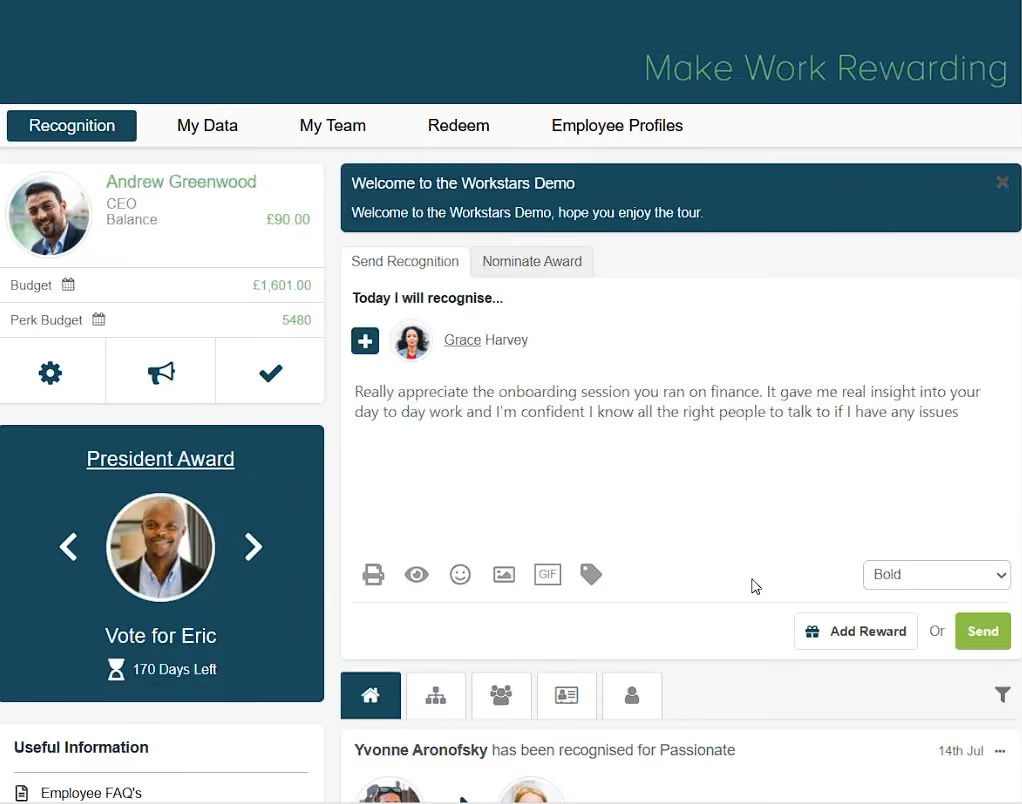
Where more and more platforms funnel users toward paid rewards, Workstars offers a refreshing alternative: customers can build their own catalog of non-monetary perks (e.g., job shadowing, extra time off, lunch with the CEO) or enable payroll reimbursements and gift cards without being charged fees by Workstars. This makes it more flexible and cost-efficient than recognition platforms that rely on vendor-issued rewards.
Workstars’ behavioral tagging system ties every recognition back to specific company values. This not only reinforces culture but also feeds into the reporting dashboards, which we deemed quite powerful. More specifically, team managers see who is getting recognized, for what values, and where gaps exist. Meanwhile, executive dashboards allow HR leaders to compare departments and track progress against recognition goals. Plus, the onboarding and customer success experience are the cherry on top. Every customer, regardless of tier, receives hands-on implementation and ongoing training.
That said, we think you’ll agree that the current UI does feel a bit utilitarian. What’s more, AI-generated recognition messaging is still in development. Good news is that the upcoming 2026 redesign promises to address both, and based on the product team’s responsiveness, we’re optimistic.
Questrade, Aventum, Weetabix, Acadia
Workstars charges per user/month, tiered by company size and features:
- Entry (£1.50): 50-250 employees; includes recognition, rewards, analytics, and full support.
- Pro (£1.60-£3.00): Adds SSO, social integrations, business hierarchy, and API access.
- Global (£1.90-£4.00): Adds multi-language, multi-currency, and cost-of-living adjustments.
Best For
Workstars is best for global organizations (50-2,500+) wanting recognition focused on peer connection rather than reward spending, particularly those that can invest in non-monetary perks and genuinely prefer culture-first over engagement metrics.
We use it to say happy birthdays. We use it to wish each other happy work anniversaries. We use it to create a positive environment for our employees. It has helped increase overall morale.
I really like the design of emails. I like that you can custom-make emails that are sent to employees. I like to provide employees with a fun tool.
They decided to use workstars as an additional resource for employee recognition for birthdays. They also wanted to recognize employees for anniversaries. They wanted to be able to give each other props on a regular basis.
Thought it was expensive for the platform. Wish it was more user-friendly. Wish we had one dedicated rep.
They are very similar to other platforms out there.
How often you plan to use it. How many employees you will have using it.
I haven’t noticed changes while we used it.
Hybrid organization that has employees all over the world.
It’s good for all organizations

WorkTango
WorkTango forces recognition to include a values tag, which creates a feedback loop. Over months, leadership can see which values are actually reinforced through recognition versus which exist only in the handbook. We found this particularly useful for understanding the gap between stated culture and lived culture. The annual commitment signals seriousness, which actually suits organizations that approach recognition strategically rather than experimentally.
PROS
- Simple, intuitive interface that's easy for all users to navigate
- Wide reward catalog spanning gift cards, prizes, and merchandise for point redemption
- Upcoming birthdays, work anniversaries, and milestones are surfaced automatically, making timely recognition easy
- Supports multiple languages including English, Spanish, German, and French
- Unlimited surveys available in English, Spanish, Chinese, French, German, Italian, Japanese, Portuguese, and Korean.
- You can add modules as you go and these will be charged on a prorated basis.
CONS
- No monthly payment option
- All plans require a minimum 12-month commitment
- No free trial available
- Billing is only done annually and all plans require a minimum agreement for a 24-month subscription (see our FAQs for more and their pricing page for full details).
- Several users have complained about the rewards redeeming process being not very intuitive.
WorkTango’s employee recognition software is easy to use, amplifies core values, and reinforces positive actions.
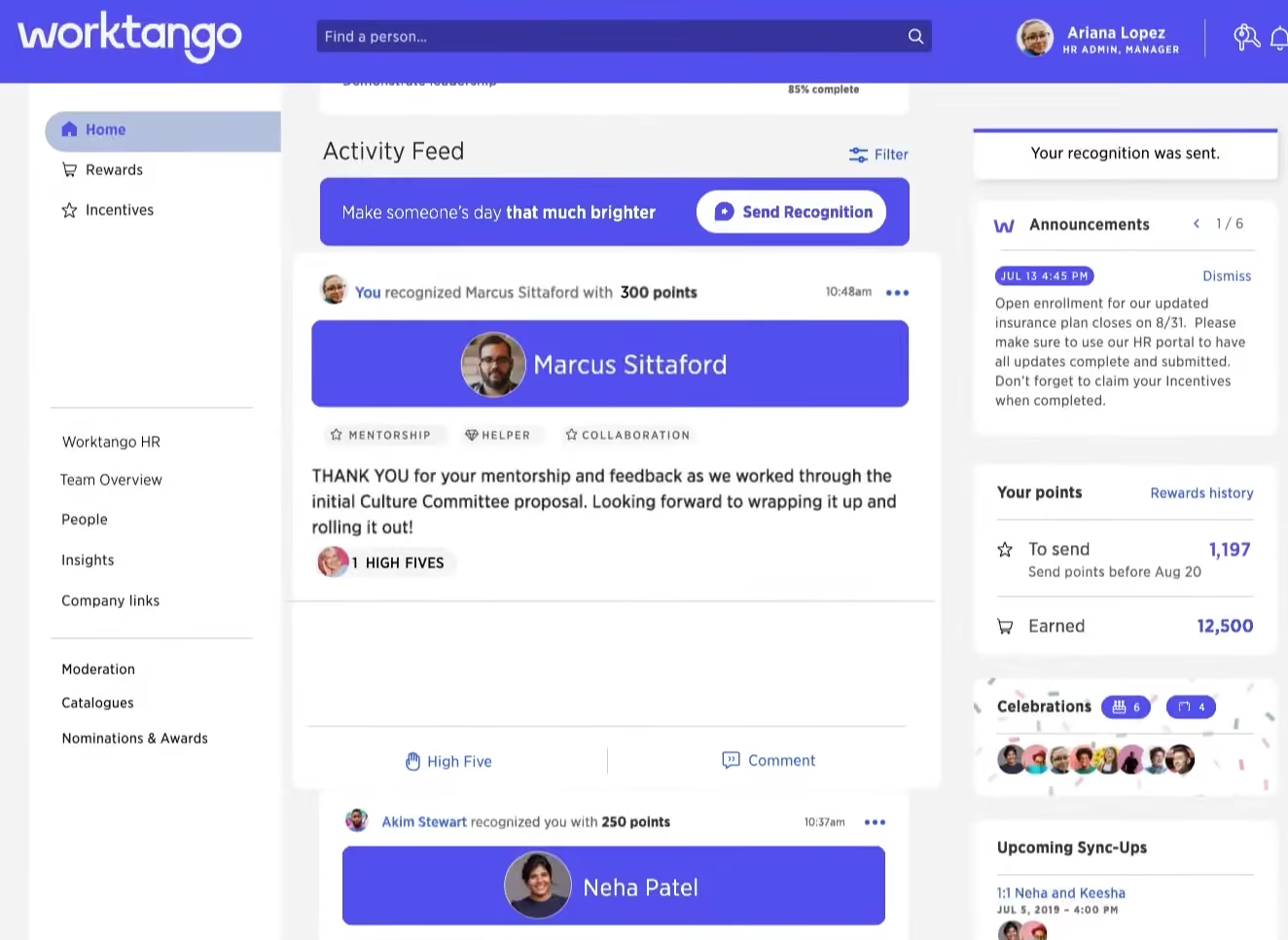
What stood out the most for us was how flexible the platform is: Employees can give public or private recognition to their colleagues anytime, anywhere, through the desktop or mobile app. This peer-to-peer, bottom-up, and top-down recognition helps enhance the employee experience by making appreciation visible across the organization.
Another thing we like about WorkTango is its focus on community building. Features like social news feeds and the ability to react to and comment on recognitions foster connections company-wide.
Employees gain visibility into recognitions across departments, roles, and locations. Adding customizable emojis, GIFs, and images further humanizes peer appreciation and makes it personal.
Integrations with communication tools like Slack and Microsoft Teams eliminate barriers by enabling recognition directly within employees' daily workflows. WorkTango also integrates with most HRISs to sync employee data seamlessly and without errors.
However, WorkTango’s pricing structure is noticeably stricter compared to other players in the market: the billing can only be done annually, and all plans require a minimum commitment of 12 months.
For any organization looking to strengthen employee experience and retention through a culture of recognition, we believe WorkTango is a worthy investment. Its thoughtful features, flexible tools, and user-friendly design enable impactful recognition that helps bring teams together, but companies should weigh its annual-only billing and lack of a trial period before deciding.
Over 1,000 companies use WorkTango, including Kia Motors, HUB International, Rexall, and Accruent.
WorkTango's pricing is tailored to each customer's unique needs.
Best For
WorkTango is best for organizations (100-5,000+) where culture transformation is underway and you need visibility into whether recognition actually reinforces stated values, particularly when values alignment is a measurable business priority.

I use WorkTango mostly to send out pulse surveys and check on how my team is feeling, ensuring any concerns are addressed quickly. I also like using it to recognize colleagues’ hard work and keep everyone motivated. Additionally, I utilize the platform's analytics to track engagement and spot any potential issues before they escalate.
I really like how easy it is to collect real-time feedback from the team, so we can tackle issues early. The recognition feature is great for keeping everyone motivated and connected. The analytics provide clear insights into engagement trends, which helped me make better decisions when I was in charge.
I believe my company decided to implement WorkTango because they felt the need for a more dynamic and real-time feedback mechanism. Before using this tool, it was challenging to regularly assess employee satisfaction and respond quickly to issues. Like many companies, they wanted to improve employee engagement and ensure that teams felt more connected to the company's mission and goals.
One key benefit of WorkTango is its ability to provide actionable insights through pulse surveys, allowing leadership to address issues in real-time. The platform’s recognition feature also helped boost morale, as employees can easily acknowledge each other’s achievements.
I personally felt very good using WorkTango during my time with the company (in the AI and SaaS industry), and it noticeably improved communication and alignment across teams.
Sometimes the surveys feel repetitive, which can cause employees to become less engaged. It would be nice if the recognition feature had more fun and creative ways to acknowledge colleagues. WorkTango could use more flexibility in customizing survey questions.
What makes WorkTango stand out is how simple and easy it is to navigate. The real-time feedback and recognition features make it much easier to stay on top of engagement and team morale. Other platforms can feel overwhelming, while WorkTango is more straightforward.
It's important to consider how easy the platform is to use and whether it fits your organization's needs. Good feedback options and solid analytics are crucial for understanding what’s working and where improvements are needed.
Over time, WorkTango has improved based on user feedback, making it more intuitive and user-friendly. New features, like more engaging recognition options, have helped us better connect with our team.
From my experience, WorkTango is particularly well-suited for mid to large-sized organizations that prioritize employee engagement and fostering a strong workplace culture. It's ideal for companies that want regular feedback and a culture of recognition, especially those with remote or hybrid work environments.
I would not recommend WorkTango for startups or very small organizations, as they may lack the necessary resources and the recognition tool might not be essential in the early stages. Companies with rigid hierarchies or those resistant to feedback and recognition might also struggle to fully utilize the platform’s capabilities.
Additionally, smaller, more traditional companies where the owner is the primary decision-maker might view this tool as a waste of money and resources.

Assembly
What we observed in testing: Assembly eliminates the need for separate logins by living inside Slack and Teams replies. The automation layer (bots for birthdays, anniversaries, milestones) surfaces recognition opportunities without feeling invasive. DoraAI analyzes messages to understand what's actually valued. This embedded focus suits organizations where high-speed communication is already the daily norm.
PROS
- Users can give recognition points directly in comment threads using the Boost feature.
- Robust Awards, Announcements and Challenges functionalities.
- The Welcome, Birthday, and Anniversary Bots automatically celebrate employee milestones with customizable messages and points.
- DoraAI provides recognition analytics through natural language prompts and visual reports.
- Recognition posts can be tagged with company core values to reinforce culture.
- Private recognition allows discreet praise visible only to the giver, recipient, and admins.
- Explore the platform for free, no need for a credit card or demo
- Great set of features for the price point
- Make your own rewards and even set up a points system with automated incentives
- You have the option to go with a month-to-month plan or a long-term contract. For the latter, you can reach out to their team for a custom deal if it’s a larger team. However, keep in mind that the minimum agreement is 12 months.
CONS
- Assembly does not offer a free trial, requiring a demo to explore the platform.
- Boosts cannot be edited after posting, and point values are locked.
- Manually updated employee data, like start dates, won’t resync with the HRIS integration.
- DoraAI's Recognition Writer occasionally alters the recognition recipient's name during the drafting process.
- Coins and points do expire, so sometimes they’ll expire by the end of the month before you can use them, although you get more the next period.
- SSO is only included with some plans. For others, it can be purchased as an add-on.
Assembly is built for companies that want recognition to happen naturally, automatically, and at scale, whether it’s coming from a team leader or a colleague mid-conversation. Boost is one of our favorites. This feature allows users to award points directly in post replies, which makes everyday appreciation feel naturally right where collaboration is already taking place.
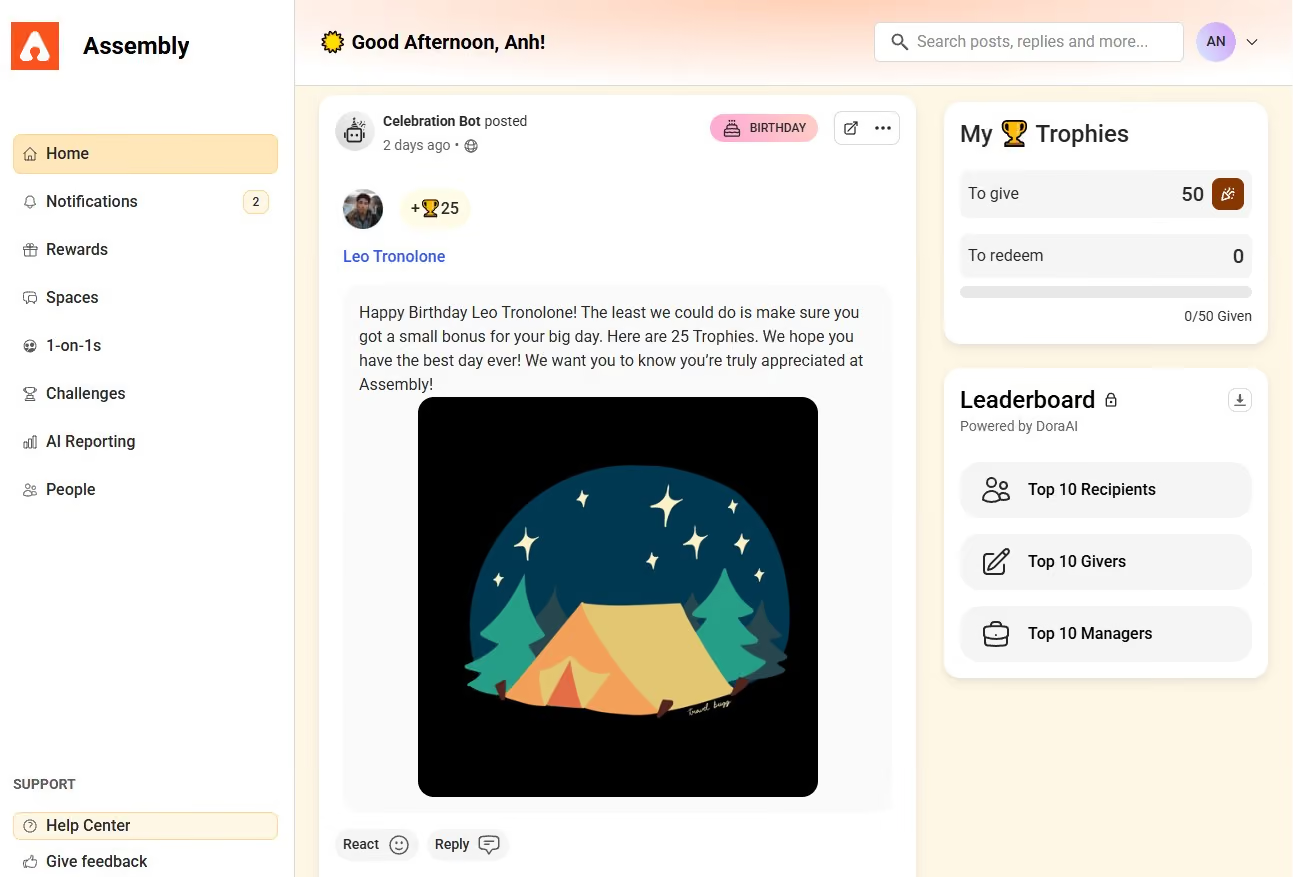
What takes this platform a step further is its automated celebration system. The Welcome Bot and Anniversary Bot celebrate employee moments with rotating GIFs, personalized messages, and points, all automatically triggered by profile data. We also saw the same polish in the Anniversary Bot, where we could stack milestone celebrations on top of annual ones.
From the admin side, granular control is a standout. We like the ability to embed core values into posts, hide points publicly, limit how many points can be given to a single user, and allow (or restrict) private recognition. While these may seem minor, from our experience, these settings actually help avoid abuse and promote fairness.
On the analytics front, DoraAI brings real-time insight. We typed “Show me which departments gave the most recognition this quarter,” and in seconds, Dora returned a clean bar chart ready to download or explore further. Asking for “Which managers haven’t given recognition this month?” gave us a simple list we could actually act on. That said, these powerful tools are admin-only, and expanding access to people managers could make the data more actionable.
We also tested the DoraAI Recognition Writer, which drafts recognition posts for users. While helpful for writer’s block, we encountered one odd bug: after pressing Try Again a few times to get different drafts, the recipient’s name unexpectedly changed. It’s a minor glitch, but users should always review the final copy before posting.
And if you rely on manual profile edits rather than a clean HRIS sync, watch out as manually edited fields like start dates don't resync, and this can cause automated bots to fail. That small detail can mean a big miss for a major milestone.
Assembly is used by 4,000+ companies (per company website).
Assembly’s employee recognition software starts at $3 per user per month (billed annually).
Best For
Assembly is best for teams (50-5,000+) living in Slack or Teams who want recognition to feel like a natural part of communication rather than a separate tool.

Assembly is used for employee recognition and engagement, which therefore can serve as a retention tool. Assembly may be used to survey employees as well.
Assembly integrates with both Slack and Teams, and this also allows it to function as a great forum for announcements. These announcements included new hire welcomes, hiring notifications, team challenges, and shout-outs.
Assembly was our go-to tool for engaging our distributed workforce.
- Assembly was easy to install and launch, as it integrated with software we were already using for communication, like Slack.
- It was cost effective for an organization with 56 employees, and scaled easily.
- It allowed our managers and "staff" level employees to become more involved in recognition and more visible across the organization.
My organization bought Assembly as a means of recognizing employees. This included work anniversaries, project completions, new hires, and any other ad hoc achievement that was appropriate.
Additionally, we used Assembly to launch our first employee engagement surveys. We began with a "pulse," leveraging the Slack integration, and later did a lengthier survey, which we continued quarterly.
- Assembly didn't integrate with our ATS, though this wasn't unexpected, as the tool we used was a UK-based start-up (Pinpoint).
- It could be construed as noise or distraction due to the many Slack notifications, which led to some muting the tool/channel.
- It was a "point" solution and couldn't replace any of our other tools like HRIS or ATS.
Assembly allowed our employees to choose their own rewards, which we saw as a good advantage. It allowed the recognition to truly feel personal and meaningful. There was a competitor tool that included far more experiences, including ones that were region-specific.
We considered this competitor seriously, as we acquired a company with offices in other states within the US, and an office in India. The interface did remind me a bit of The Ladders and Glint, in that each employee had a personalized homepage where they could view their recognition and milestones.
People should consider the size of their organization and where employees are physically located. They should also consider if theirs is an organization which embraces communication via technology vs. in-person only.
They should ensure they have the buy-in from people managers, as their use of the tool makes all the difference. If some won't engage with the tool, it leaves an inequity across the employee population.
Even during the time we used it, Assembly added additional retailers to their list of available rewards, both online and physical locations at which to redeem points earned.
Assembly is very good for an engaged, distributed workforce. We chose such a tool because of a large remote population, to build connections as organically as possible.
Assembly would not be good for a company that doesn't embrace technology as a means for building connections and engaging cross-functionally. Additionally, an organization that heavily favors in-person meetings or has only one location would not likely have as much of a need.

Connecteam
We noticed Connecteam designed for a different use case than most platforms in our review. While others assume email and web browsers, Connecteam is built mobile-first—SMS delivery, offline capability, printable recognition. When we tested with frontline teams, adoption was notably higher than lighter tools, because the friction was genuinely lower. We're not saying it's revolutionary, but it addressed a real gap we observed: most platforms ignore the teams that need recognition most.
PROS
- Clean, intuitive interface that's easy to navigate for both managers and employees
- Extensive gift card catalog covering apparel, tech gadgets, dining, and more
- Shoutouts and badges can be personalized per recipient, making recognition feel more meaningful
- Transparent pricing with a free 14-day trial
- One of the only fully-mobile HR tech tools for deskless workers
- Very adequately-priced for all it entails, SMB-friendly
- Quite open to feedback, having implemented user suggestions as features in the past.
CONS
- Feature depth creates a learning curve, especially for first-time users
- Several key features are locked behind higher-tier plans despite the platform's broad scalability
- Recognition is not available as a standalone purchase; access requires buying the full HR & Skills hub
- In the communication hub, the app offers no confirmation that messages were sent and/or seen.
- Certain features that some teams consider essential, such as GPS-tracking, are only available in the higher-tier pricing plans.
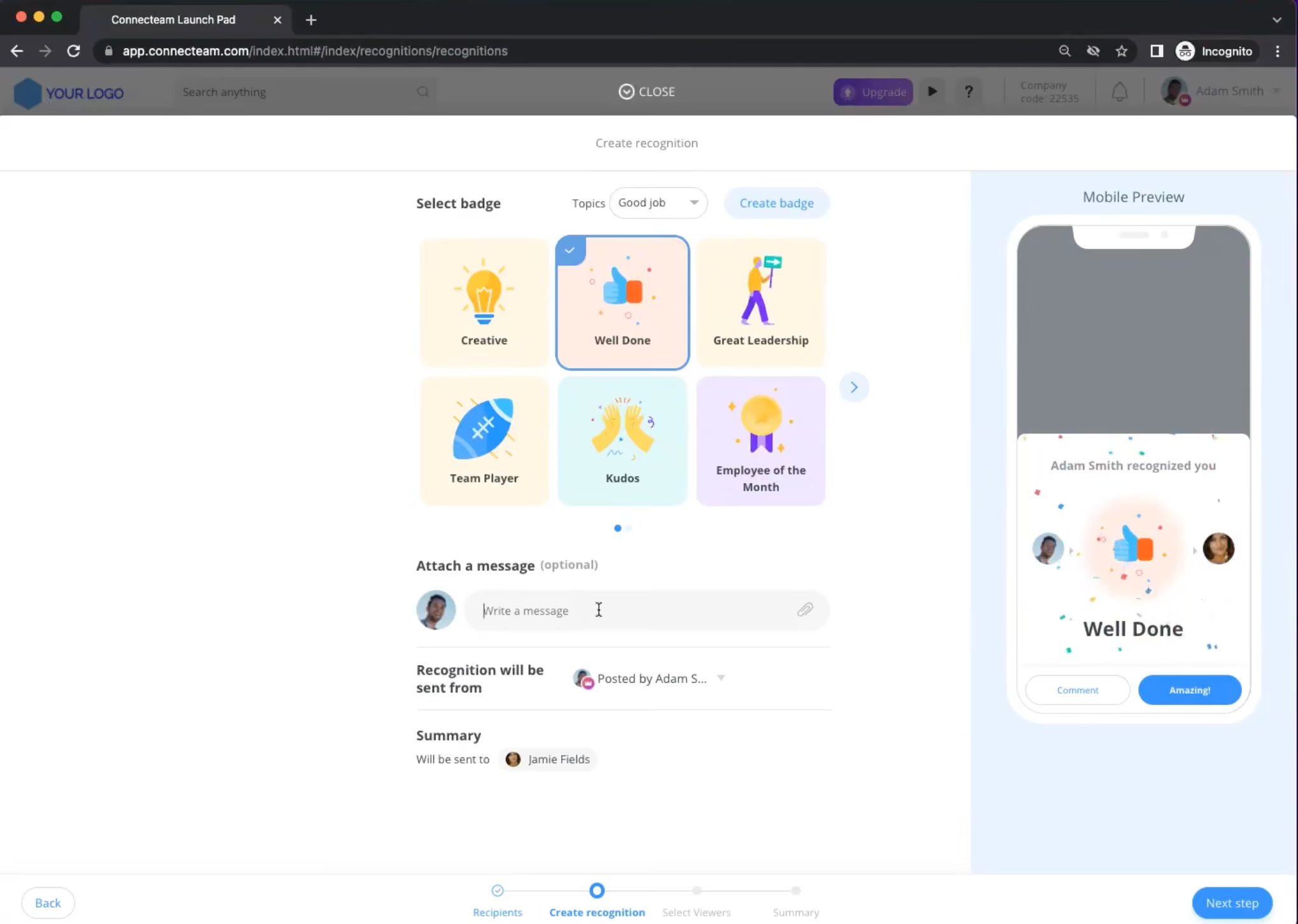
Connecteam’s HR & Skills hub packs impressive recognition program features that make it easy to celebrate employees' achievements and milestones, no matter where they are.
We like how recognition is fully customizable. Managers can personalize badges for any occasion, add heartfelt messages, and share the appreciation privately or with the entire team.
What’s more, managers can brighten their employees' day by granting them digital tokens on the spot or by configuring the platform to automatically award tokens based on system usage and special occasions like birthdays and anniversaries. These tokens can be redeemed for gift cards from several well-known vendors, including sportswear brands, tech giants, and restaurants.
The recognition platform's analytics dashboard provides a clear overview of how tokens are being used, including who is sending tokens, who is receiving them, and how employees are spending their rewards.
Having this level of insight isn’t just good for tracking purposes but also for managers to constantly improve their rewards and recognition strategies.
However, with the platform’s numerous features comes a learning curve for new users, which can delay initial adoption. While we appreciate the scalability of Connecteam, as a small business, we aren’t a fan of how the employee recognition solution is marketed. The offering isn’t sold separately. You’d need to purchase the full HR & Skills hub to access it.
Connecteam’s customer list boasts many recognizable brands, including Foot Locker, EY, Mango, and Caremark.
Connecteam’s pricing ranges from $29 to $99 per month, depending on the features you need. Note that this range is for 30 user seats and free plans for companies with under 10 employees are available. For more details on all plans, please visit Connecteam's Pricing page.
Best For
Connecteam is best for frontline and deskless teams (retail, hospitality, healthcare, field service) where email-based recognition would never get used and recognition needs to happen on phones or in motion.

We use Connecteam timekeeping, scheduling, and timesheet reviews/approvals. The timekeeping is nice because our staff is able to clock in and out with their mobile device.
Same thing with the scheduling tool: it's very easy to notify the entire team of a new shift that is open for someone to take, and a team member can easily accept it all on their mobile app.
The timesheets are easy to read and edit. I do wish there were a message feature within the timesheets that allows me to quickly send a note without having to leave the timesheet view and go to the chat tab.
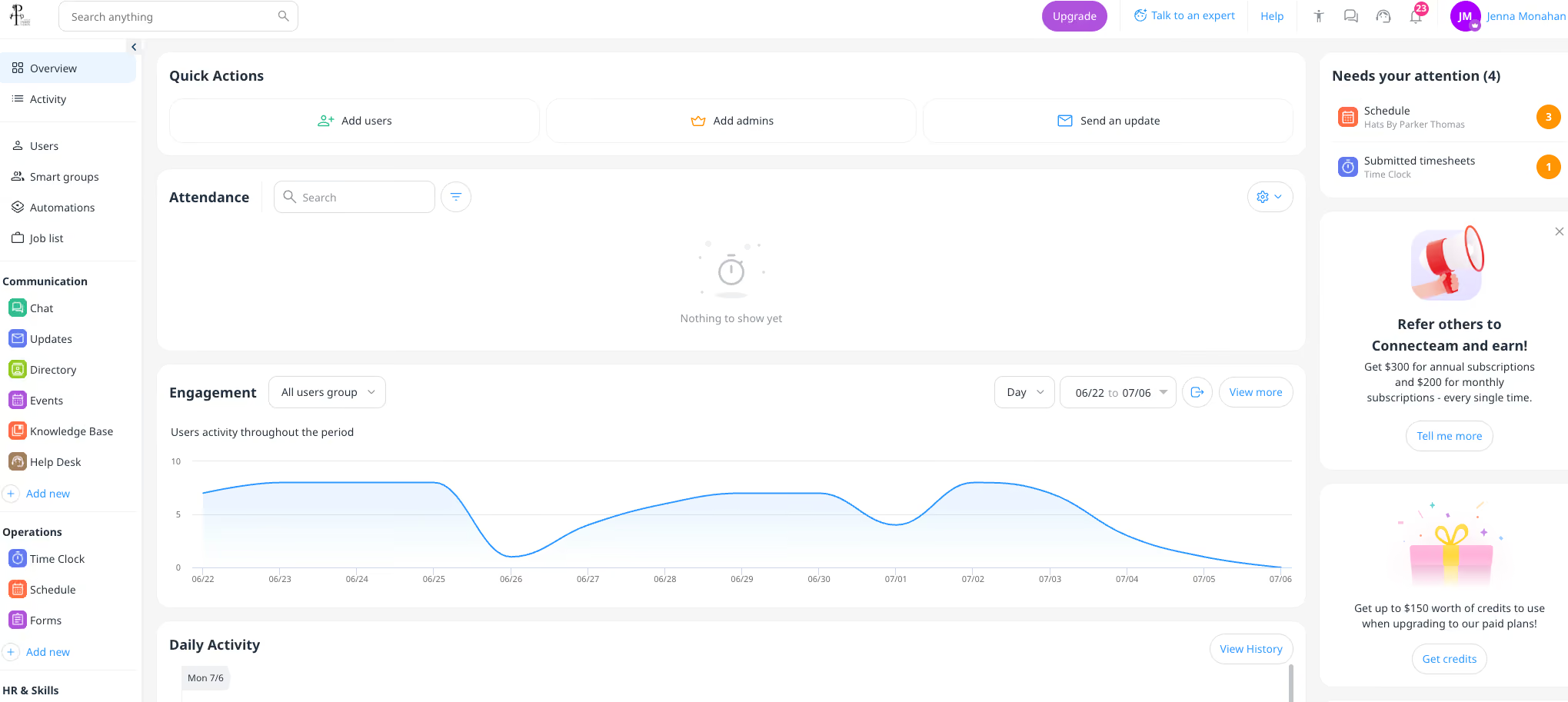
- I like the timekeeping solutions within Connecteam. I find the mobile clock in/out features to be very easy, and I really appreciate the geo-fencing options to remind staff to clock out if they have left their work location.
- The scheduling features are especially helpful, particularly the ability to send a team-wide notification inviting employees to claim an open shift. This makes it easier to fill schedule gaps quickly and efficiently.
- I like the chat offerings within Connecteam as well. The ability to create small groups or to message the entire team is handy for various reasons.
Our team consists of several remote staff who needed one centralized place for our timekeeping and scheduling needs. We previously used a spreadsheet for scheduling shifts, but that became very difficult when people would want to switch shifts or make simple changes.
Connecteam was chosen for its centralized team messenger, scheduling, and timekeeping offerings. We have used it for just over a year, and it's been a good addition to the company. I don't think that it's a perfect solution, but it's good for what we need it for.
- Adding a user is very clunky and not user-friendly. My new hires never receive any invite in their email, and it's constantly a struggle to get them onboarded.
- When fixing timesheets, it can be very difficult to make adjustments if the shift goes into the next day. It's almost impossible to fix without having to completely delete the shift and re-enter.
- I think nearly $1,000/year is too much for the solutions we use.
It's very mobile-friendly compared to other solutions like Homebase or BambooHR. Onboarding new employees is not as easy as it is with other systems. I prefer Homebase's scheduling and timekeeping offerings, and I suggest BambooHR for overall HRIS system needs.
If possible, I recommend evaluating a few HRIS platforms through free trials to determine whether a single system can meet your organization's needs.
While Connecteam is ok at scheduling, timekeeping, and team communication, it is not a comprehensive HRIS for organizations that need strong HR support, payroll processing, benefit administration, and employee records management.
Relying on multiple systems can increase administrative complexity and software costs, especially for smaller teams.
Connecteam has added more workforce management solutions within its platform. It now has more onboarding and digital form offerings for handbooks, policies, etc. to be digitally signed.
A small, remote workforce is an ideal organization for Connecteam.
Connecteam wouldn't be the right fit for large corporations that have big HR needs like benefit administration and payroll processing solutions.

Guusto
Guusto is hyper focused on hourly workers—an underserved segment. The $5-20 gift card range is large enough to feel like real money, and also small enough to distribute regularly. Printable cards meant managers could acknowledge work immediately rather than requiring an app. We found this practical approach to frontline recognition more effective than platforms treating hourly workers as an afterthought.
PROS
- Straightforward recognition system that works great for hourly or field employees.
- Mobile apps for Android and iOS allow use on phones.
- Only reward givers pay a subscription fee - unlimited recipients can be added for free.
- Partnership with One Drop Foundation donates clean water with gifts.
- International reward options expanded to over 4,000.
- They partnered with the One Drop Foundation to donate 1 day of clean drinking water for every gift sent.
- All gift cards are actually digital, meaning there’s no plastic waste. This also makes it a very remote-friendly product.
- Guusto is not a points program. All the gifts within the platform are real dollar value.
- As of early 2023, their global rewards options have grown to the thousands.
- In the process of becoming more international, gift redemptions can now be done in almost any currency within the regions they operate in.
CONS
- You can only fund accounts with USD or CAD credit, though gifts can be redeemed in many currencies.
- Essential and Premium plans have monthly minimums of $200 and $560, respectively.
- Accounts can only be funded with USD or CAD
Guusto’s innovative and easy-to-use platform supports recognition programs for employees at all levels, whether they work on the front lines, at the office, or at home.
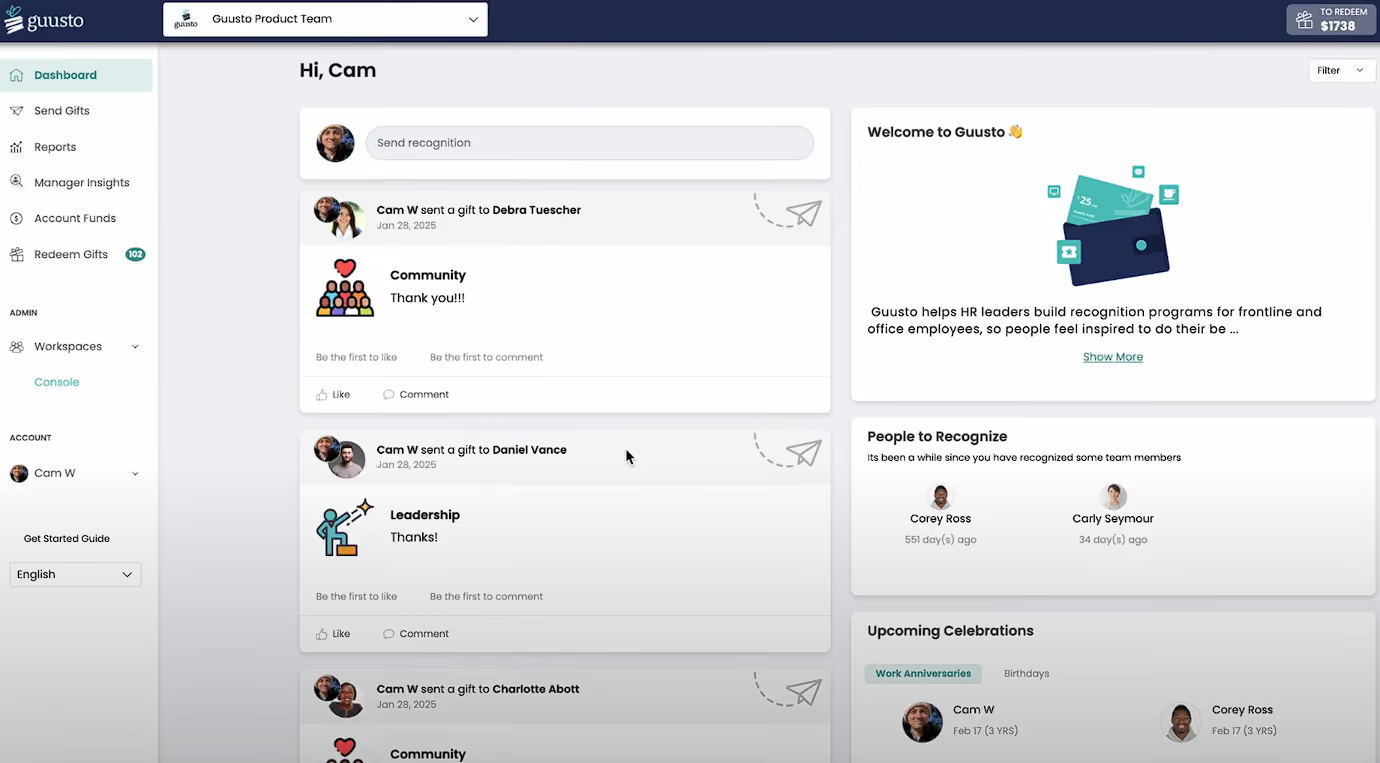
Many recognition platforms rely heavily on points-based systems that don't resonate with hourly or field employees. But Guusto allows companies to send printable rewards or gift cards that provide tangible value. We’ve given it a shot ourselves and can confirm that there's no learning curve to it: If an employee receives a $5 gift card, they get $5.
The recognition platform also makes it simple to set up peer-to-peer recognition programs, performance goal tracking, anniversary/birthday awards, and more. Managers receive budgets to send spot bonuses or non-monetary "shoutouts" to motivate their direct reports. Everything is configurable based on each company's unique needs and work culture.
Beyond its features, we admire and commend Guusto for its commitment to social impact. The company donates clean drinking water and supports a host of mental health organizations.
We’ve recently noticed that Guusto has updated its pricing structure, and while we’re happy that the Free plan remains, there are some drawbacks. The Lite tier has jumped from $40 to $125 per month, while the Essential tier and Premium requires a minimum spend of $200 and $560 per month, respectively. These increases could be a real burden for budget-conscious teams, we’d imagine.
Guusto is used by many known organizations including Staples, Compass One Healthcare, The Body Shop, Fairmont, and Rexall Pharmacies.
Guusto offers 4 plans:
- A free plan for individual reward senders using a single user account and a top-down program.
- A Lite plan that costs $125 per month for individuals sending and scheduling rewards in bulk.
- An Essential plan that costs $2.50 per seat per month for peer-to-peer rewards and $5 per seat per month for top-down rewards.
- A Premium plan that costs $3.50 per seat per month for peer-to-peer rewards and $7 per seat per month for top-down rewards.
Best For
Guusto is best for service-industry organizations (healthcare, retail, hospitality) with high volumes of hourly staff who want immediate, tangible recognition that happens on the work floor, not through an app later.

I’ve been using Guusto to send a thank you to referral sources who send a new client my way who funds a mortgage with me. After the mortgage funds, I send them a gift with a thank you message attached. I have found that this helps to express to those referral sources how much I appreciate their support. Sending these from one app saves me time!

I like the variety of merchant options that are available to the recipient. I love how easy Guusto is to use. Their customer support has been top notch and I’m confident they’ll be able to help if there’s ever issues in the future.
I am a sole proprietor Mortgage Broker, with no employees. My use for Guusto has been to thank referral sources with gift cards. I decided to use Guusto because I didn’t like having to select just one merchant option and preferred to give the referral source the option to choose.
I wish it were an option to fund your account with amounts under $500 for free. I wish the gift card expiry selection could default to the selection of the company’s choice. I haven’t yet looked at integrations, but I’m hopeful I can integrate it with Google Contacts so I don’t have to look up email addresses for each gift.
I haven’t used any other apps like Guusto in the past.
The ease of use should be the top priority because you don’t want to make extra work for simple incentives. The merchant options should be the next - no point giving gifts if the merchant list is limited or undesirable.
This system is working great for my business as a Mortgage Broker looking to thank and incentivize referral partners, but I think it would be even more useful in motivating employees in those industries that require a lot of collaboration.
Anything in the public service, as extra funds for staff are always so limited.
C.A. Short Company
C.A. Short operates as an implementation partner rather than a software vendor. Instead of forcing your org into their template, they customize for yours. It's not scalable the way SaaS is, yet in our experience, this approach makes the most sense for large orgs with complex needs (multiple business units, unique approval processes, integration requirements).
PROS
- Provides high-touch, concierge service, handling platform customization and program setup.
- Supports digital and physical peer-to-peer recognition, including eCards and on-the-spot recognition cards.
- Robust customization options for tailored milestone programs and reward structures.
- Strong customer support ensures hands-on onboarding, ongoing assistance, and program adjustments.
- Reporting and analytics offer valuable insights into employee engagement trends.
- The rewards and recognition programs are coded to fully match each customer’s needs.
- Combines digital (peer-to-peer eCards, social feed-style recognition) and physical recognition (on-the-spot recognition cards.)
- Dedicated account managers, customer service reps, and an implementation team.
CONS
- The interface feels outdated compared to more modern and visually appealing alternatives like Nectar or Guusto.
- Reporting relies on Power BI, requiring users to leave the platform to access analytics rather than having built-in, real-time insights.
- Lacks direct integrations with major HR systems like Workday or BambooHR.
- The UI is not as modern as some competitors.
- Changes to the system require communication with support rather than self-service configurations.
- Reporting relies on Power BI rather than being embedded within the platform.
C.A. Short Company's employee recognition software offers a unique, high-touch experience that stands out in an industry dominated by sleek, self-service platforms. While the product itself has a somewhat dated look and lacks some modern bells and whistles, the company's deep commitment to personalized service makes it an excellent fit for organizations that prefer a more hands-on approach.
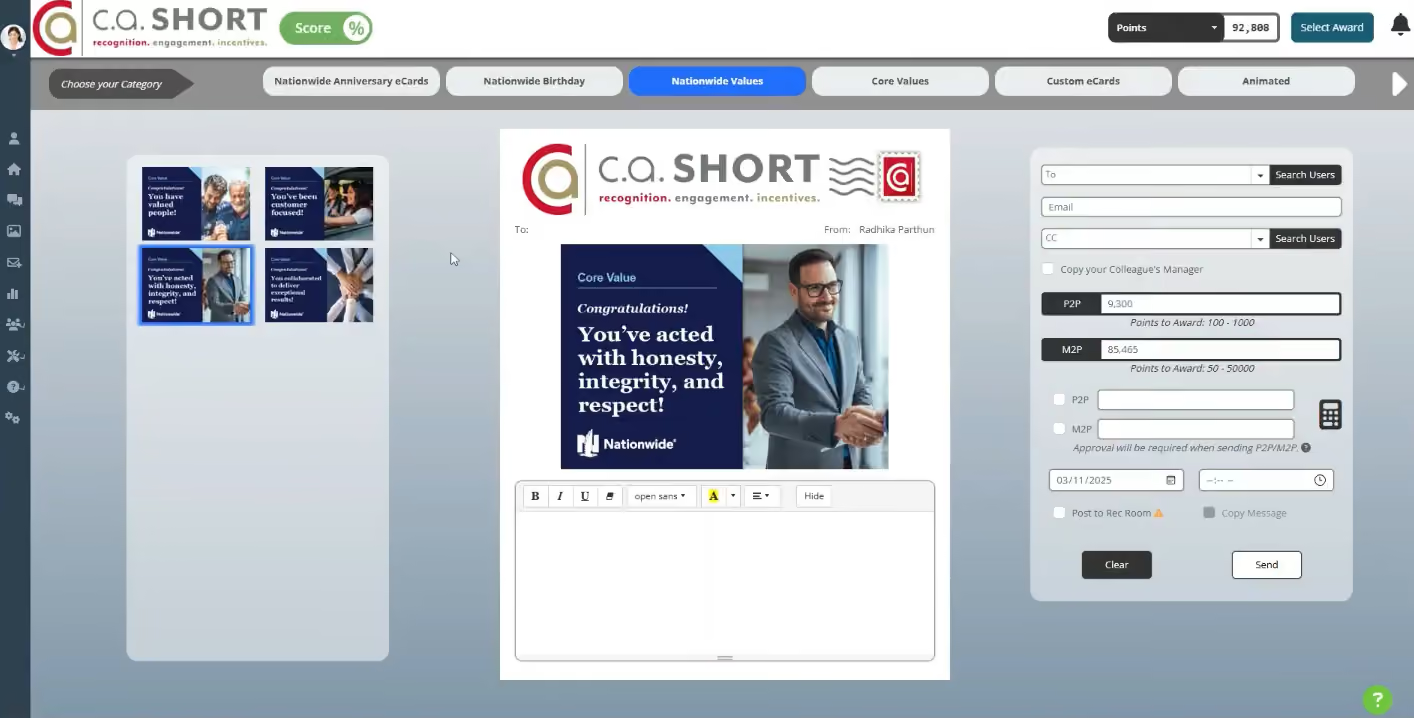
Another highlight of our experience was the peer-to-peer recognition tool. C.A. Short integrates both non-monetary and monetary recognition. It also supports eCards and social recognition in the “Rec Room” (their version of a social feed). Interestingly, unlike many recognition systems that rely entirely on digital shoutouts, this platform even allows for physical “on-the-spot” recognition cards that employees can hand out in person. We can imagine how companies seeking a system that feels more intentional rather than transactional would value this feature.
We also appreciate the vendor’s approach to customization—they take the time to code each platform to a client's specifications. This includes everything from designing personalized career milestone programs to configuring reward structures based on a company's values. It’s quite manual and, therefore, requires more back-and-forth with their support team, but it also removes much of the administrative burden from HR teams and makes the system work so well for organizations that want a guided, concierge-style implementation rather than a DIY software experience.
In terms of reporting and analytics, the platform provides good visibility into how employees interact with recognition programs over time. During testing, we were able to track how frequently employees were being recognized and compare engagement levels across departments and locations. One drawback, though, is that reporting is currently powered by Power BI and requires users to leave the platform to access these insights. C.A. Short has assured us that full integration is on their roadmap, but for now, this extra step may be a hurdle for those looking for real-time, in-app analytics.
One limitation we noticed is the lack of direct connections with major HRIS vendors like Workday and BambooHR. While C.A. Short does offer automated secure sFTP folders for data integration, which eliminates manual data imports, this approach may not be as familiar to most HR professionals as a self-service native integration option.
Although the software itself is functional, as briefly mentioned at the beginning, its interface doesn’t feel as modern or intuitive as some competitors such as Nectar or Guusto. That said, C.A. Short makes up for these shortcomings with a strong customer service team that is deeply involved in onboarding, ongoing support, and program adjustments.
C.A. Short Company's client list includes Dollar General, Penske, Sysco, Tractor Supply, Old Dominion Freight Line, and Sunbelt Rentals.
C.A. Short Company does not offer a free trial and has custom pricing.
Best For
C.A. Short is best for large organizations (500+) with unique recognition needs or complex workflows that won't fit standard platforms and where a hands-on partnership model justifies the investment.

Matter
Matter's bet is that recognition inside Slack or Teams where employees already work removes friction. In testing, adoption was measurably higher than separate platforms. We're not saying it invented the concept, but the execution—full peer-to-peer suite without leaving Teams—works well for teams already living in those tools. Plus, the free plan is genuinely useful, not a limited teaser.
PROS
- Full peer-to-peer recognition suite built natively into Slack or Teams
- Clean, user-centric interface that's easy to navigate
- Affordable, transparent pricing with discounts for nonprofits and educational institutions
- Free plan includes unlimited users, customizable notifications, and kudos
- Integrates with 200+ HRIS systems
- Option to reward survey completions with redeemable Matter coins.
- Pulse Survey delivered and responded to right in Slack or MS Teams.
- Pulse Surveys use real-time data from a library of 100 questions to provide insights on cultural categories.
- Survey recipients won't see the same question twice within 90 days.
- Real-time anonymous feedback with custom notifications.
- Affordable and transparent plans with discounts for non-profits and schools.
CONS
- Only works within Slack or Teams
- Unused coin allowances (excluding Kudos coins) reset weekly
- Free plan caps historical analytics at 30 days and limits kudos to 5 per channel per week
- To use Matter, you must have either Slack or Teams installed.
- At this time, the vendor doesn't allow the Pulse Survey questions to be editable.
- Pulse surveys are only available on the highest-priced plan.
What really won us over after testing Matter was the way this peer-to-peer recognition software has streamlined membership management.
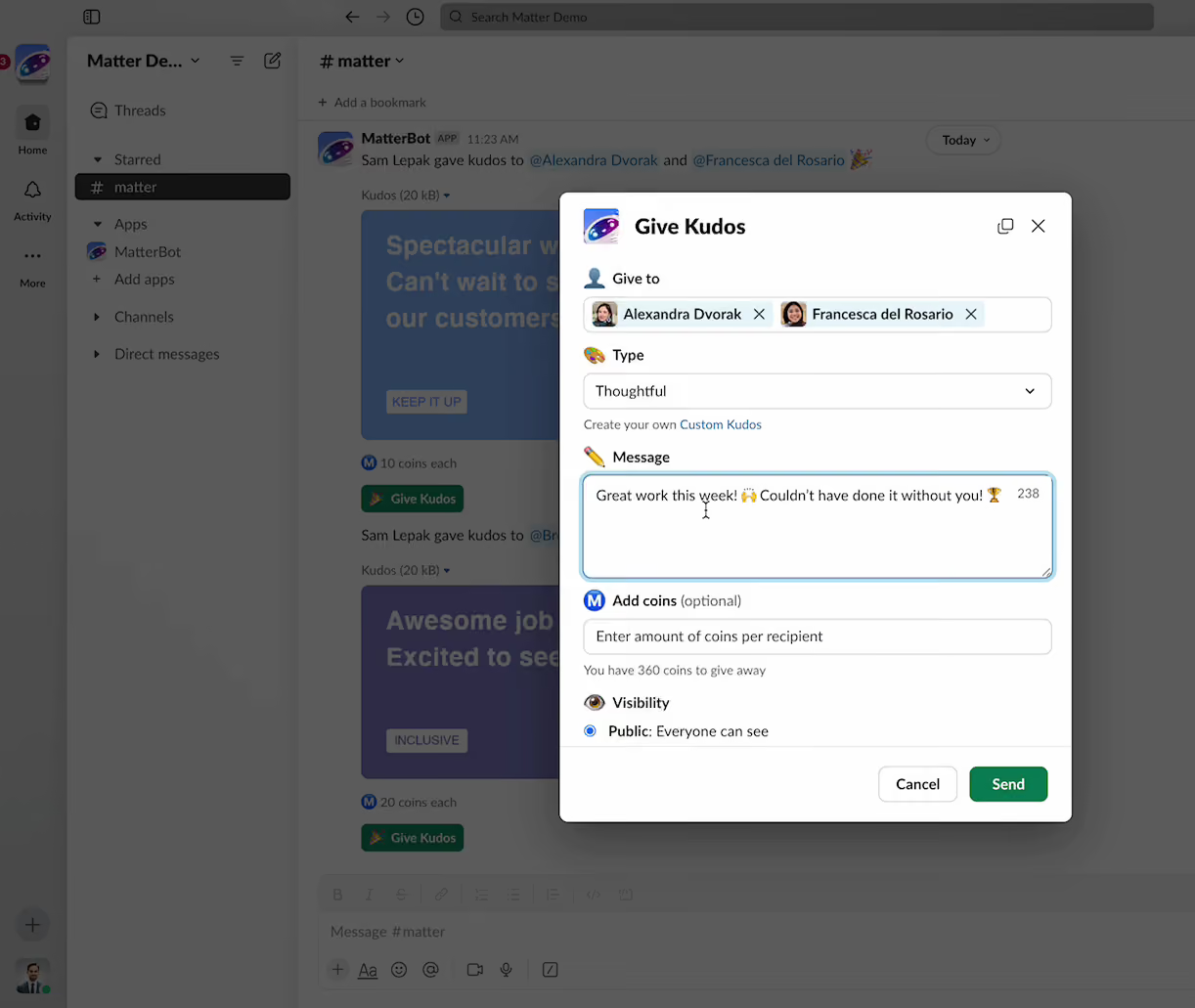
Once you sync it with your Slack or Teams, you can automate the whole process of adding or removing team members directly through the settings of these two communication apps.
Giving kudos turned out to be very straightforward both when we were on our computers or using the Slack app on our phones.
We liked that we could select one or more people to recognize at once, choose from one of the nine kudos templates to type our message of praise, or even create our own personalized card. Plus, the ability to add Slack emojis did bring an extra layer of fun to the whole experience.
Another aspect we found pretty cool was the coin system. This feature allows team members to attach coins to their kudos, which the recipient can then redeem for gift cards, charitable donations, prepaid cards, and more to treat themselves.
And Matter’s pricing—it’s highly accessible with a free plan that supports unlimited users, customizable notifications, and kudos.
It's worth mentioning, though, that the free plan allows for just 5 kudos sent per channel per week and only retains 30 days of historical analytics data, so any older data won’t be recorded.
Another thing to bear in mind is that any unused coin allowance, except for Kudos coins, doesn’t carry over. Depending on how you view it, this could either be an engagement booster or a potential waste of money.
Matter is used by 4,700+ organizations (per company-provided data).
Matter provides four pricing options, ranging from no cost to $5 monthly. You can also access all features the tool has to offer via its 30-day free trial period.
Best For
Matter is best for small to mid-sized distributed teams (10-2,000) already using Slack or Teams who recognize that a separate platform creates adoption barriers you don't need.

Bucketlist
Most platforms see support as a cost center. Bucketlist treats implementation as a partnership. The feature set was solid—experiential rewards, community elements—but the real differentiator was the support approach. Recognition programs fail because adoption doesn't happen; hands-on guidance fundamentally changes that outcome.
PROS
- Intuitive interface on both desktop and mobile for easy navigation.
- Flexible peer recognition system with optional approval settings.
- Wide variety of rewards, including gift cards, donations, and experiences. Customizable reward options also available.
- Dedicated onboarding and account managers for all plans.
- The interface is intuitive and easy to navigate on both desktop and mobile.
- The platform supports customizable rewards and peer recognition tied to company values.
- Dedicated onboarding and account managers are provided with every plan.
- Recognition can be automated for milestones like birthdays and work anniversaries.
- Leaderboards and competitions help gamify employee performance and engagement.
- Bucketlist supports English, Spanish, and French for multilingual teams.
- Integrations are available with 80+ tools, including Slack, Teams, Outlook, and BambooHR.
CONS
- No option to go back when browsing GIFs for shoutouts.
- Somewhat limited experiential reward options compared to cash-based incentives.
- One-time setup fee and monthly per-employee charge may be costly for smaller teams.
- Though intuitive, the platform's interface is less attractive and modern than some competitors.
- The experiential rewards catalog is limited compared to cash and gift card options.
- The shoutout interface lacks a back button when browsing GIFs.
- Setup and per-employee fees may be too costly for small organizations.
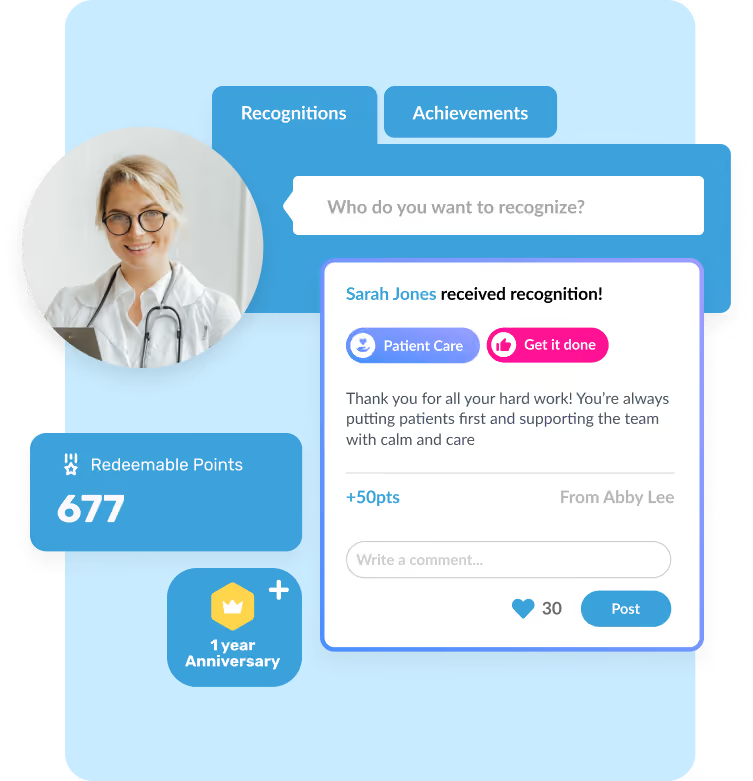
One of the first things we noticed when testing Bucketlist was how user-friendly the platform is. Whether on desktop or mobile, navigating the system felt intuitive for both administrator and employee users.
Employees could send recognition messages (or “shoutouts”) to peers, attaching tokens that could later be redeemed for rewards. We liked that companies could choose whether the recognitions required approval or not since this offers a nice balance between spontaneity and structured oversight.
The rewards marketplace was another strong selling point. Employees can redeem points for a wide variety of rewards, including digital gift cards, charitable donations, and experiential rewards. Moreover, the system allows administrators to add additional gift cards that align with company culture and employee preferences. We found this particularly helpful, as it gives organizations more control over their incentive programs.
Having a straightforward UI is great, but having a designated expert who walks you through the process and helps customize features takes it to another level. And we loved that Bucketlist offers just that. Every plan includes a dedicated onboarding manager and a dedicated account manager, a level of service that many recognition platforms lack. Whether it’s tailoring recognition settings, configuring approval workflows, or tweaking reward options, the extra support made the user experience feel smooth and stress-free.
While Bucketlist offers many strengths, we did encounter some challenges. More specifically, searching for GIFs when sending shoutouts was a bit frustrating, as there’s no way to go back to a previous option if you scroll past one you like. This might sound minor, but in practice, it slows down the experience and makes it feel a bit clunky.
Though Bucketlist’s cash-based incentives and gift cards were plentiful, we couldn’t help but feel the experiential rewards catalog is somewhat limited. Many companies are moving toward experience-based rewards, so it would be great to see Bucketlist expand its options in this area.
Lastly, pricing could be a barrier for smaller teams due to the system’s one-time setup fee and monthly per-employee charge. While the high level of customization and customer support helps justify the cost, businesses with fewer than 200 employees looking for a low-cost option might find Connecteam and Matter better alternatives.
500+ companies, including RBC, Chick-fil-A, and Danone.
Bucketlist plans cost around $2-4 per employee per month, plus a one-time setup fee and an annual fee.
Best For
Bucketlist is best for mid-large organizations (200-5,000+) wanting comprehensive features backed by actual hands-on guidance, rather than self-serve where you're responsible for driving adoption alone.

It's mainly used for peer-to-peer recognition. We have, in the past, built in birthday and anniversary awards. The birthday and anniversary awards were programmed to apply automatically based on the date in the employee's profile. We have also used it for larger awards, such as holiday awards.
Employees have a lot of fun with Bucketlist. There are many fun recognitions they post on the feed. We like the flexibility to use it for company awards. If we need to reward an employee for an achievement, it gives us a way to do that quickly. We also like how it integrates with Slack.
We have had Bucketlist for about three years. We purchased it to reward and recognize employees. We wanted a system that allowed peers to reward peers, managers to reward employees, and the company to provide larger rewards (for anniversaries, birthdays, etc.).
The only con I see with Bucketlist is not directly related to the tool itself but to the nature of the rewards. The rewards need to be included in employee income, so we must download the transactions and apply them as imputed income on employee paychecks.
Since it’s taxable, we occasionally get questions from employees. We could resolve this by grossing up, but that would be an additional expense.
We have not used other tools for comparison. We have looked into alternatives but did not see significant differences, so we cannot provide a definitive comparison.
First, determine the budget you will allow for employee spending. The platform has a base cost, but the employee reward budget must also be considered to understand the total cost. Account for headcount changes. Consider how the income will be integrated into employee paychecks.
Bucketlist has added the Slack feature, additional award options, and more fun ways for employees to recognize each other.
I think Bucketlist is good for any organization.
There are none that I can think of. It is a fun way for peer, manager, and company recognition.

Semos Cloud
Semos Cloud resides natively within your HRIS (Workday, SuccessFactors, Oracle), removing login friction and embedding appreciation directly into performance and compensation workflows. This embedded strategy is a logical fit for global enterprises. Plus, their SAM.OS AI agent offers guided drafting based on user behavior—a practical utility for driving program adoption rather than just a flashy feature.
PROS
- Native integration with SAP SuccessFactors, Workday, and Oracle HCM eliminates separate logins and sync issues.
- AI-powered Recognition Copilot and Message Quality Indicator improve message quality and inclusivity.
- Strong frontline enablement with SMS access and no-email-required login options.
- Built-in fraud detection monitors suspicious point circulation and favoritism patterns.
- Global rewards catalog supports 170+ countries with zero markup on rewards.
- Native integration with SAP SuccessFactors, Workday, and Oracle HCM eliminates separate logins and sync issues.
- AI-powered Recognition Copilot and Message Quality Indicator improve message quality and inclusivity.
- Strong frontline enablement with SMS access and no-email-required login options.
- Built-in fraud detection monitors suspicious point circulation and favoritism patterns.
- Global rewards catalog supports 170+ countries with zero markup on rewards.
CONS
- No free trial available.
- Pricing is not publicly disclosed.
- Primarily designed for enterprises; may be too robust for small businesses.
- Broad platform scope (recognition, engagement, performance, AI agents) may feel complex for teams seeking a lightweight recognition-only tool.
- No free trial available.
- Pricing is not publicly disclosed.
- Primarily designed for enterprises; may be too robust for small businesses.
- Broad platform scope (recognition, engagement, performance, AI agents) may feel complex for teams seeking a lightweight recognition-only tool.
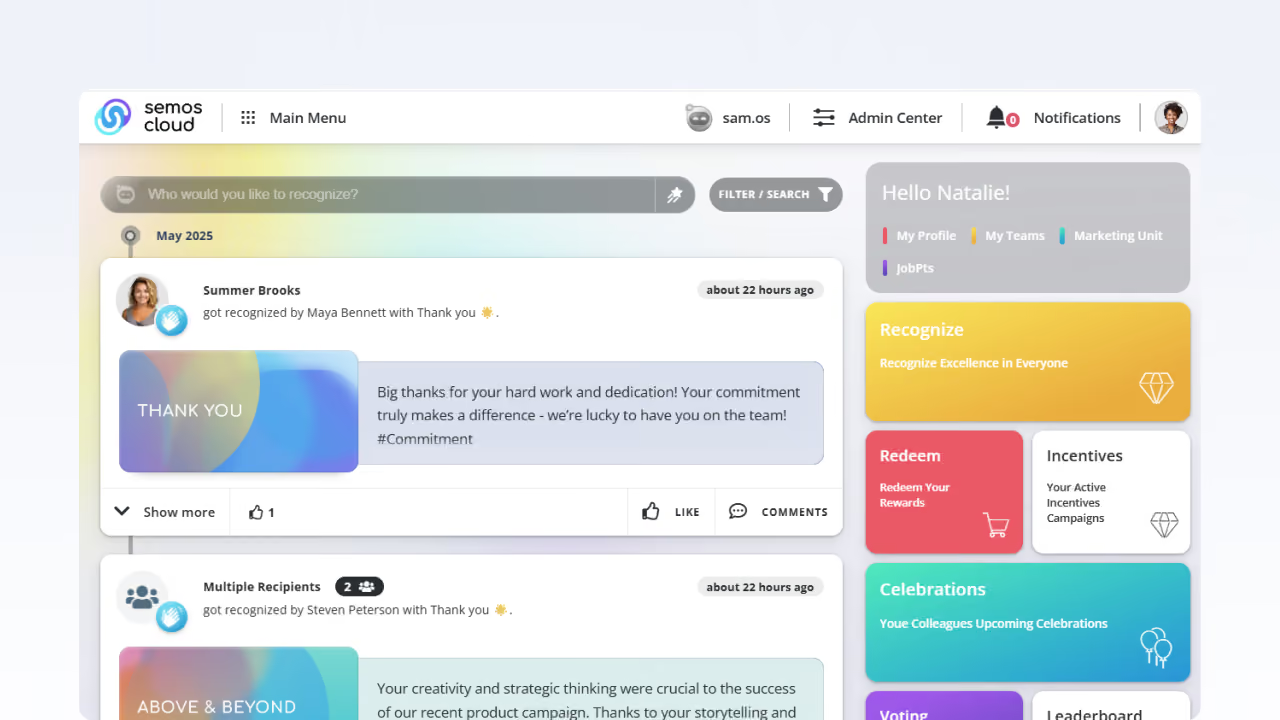
Semos Cloud calls itself a People and Culture Intelligence platform, and after going through their demo and experiencing the tool, that framing holds up.
The native integration story is a big part of that. Semos Cloud embeds directly into enterprise tools like SAP SuccessFactors and Workday. Hence, it’s enterprise-grade tech that you can also incorporate into your HR workflows as a stand-alone tool. That flexibility is not something we see often.
Another thing I appreciated is how seriously they take deskless accessibility. Many enterprise tools claim to support frontline workers, but Semos Cloud demonstrated SMS-based participation and workflows that do not require corporate email accounts. The product appears designed to reach manufacturing floors, retail stores, and field teams as intentionally as open plan offices.
For a company operating mainly on the enterprise sector, they also adopt new tech relatively quickly. The AI Recognition Copilot, branded as SAM.OS, turns recognition into a guided chat-style experience. Instead of navigating multiple screens and configuration steps, users interact with what feels like a digital assistant that helps draft messages, suggest recognition types, and streamline the process. It reduces friction in a way that feels modern rather than bureaucratic. I can see this being useful for a large organization where processes can easily become cumbersome.
It is also worth noting that while Semos Cloud is not owned by SAP, they are clearly a strong partner within that ecosystem. Their positioning inside SAP and Workday environments reinforces their enterprise credibility without limiting them to customers of a particular HRMS.
The team that walked us through the demo was thoughtful and detail-oriented, and the product reflects that same mindset. That said, this is not a lightweight recognition feed for small teams. It is built for structured governance, HR integration, and global scale.
If you are a large organization looking for enterprise-grade recognition that integrates deeply into your HR stack and reaches both deskless and office workers, Semos Cloud deserves a serious look.
Sephora, SAP, Japan Tobacco International, Colgate-Palmolive, Chevron Phillips, Coca-Cola entities
Semos Cloud offers subscription-based pricing:
- Monthly recurring license fee (based on user count)
- One-time implementation fee
- No markup on rewards (pass-through pricing)
- Pricing negotiable based on scope and geography
Semos Cloud does not publicly disclose pricing and does not generally offer a free trial.
Best For
Semos Cloud is best for enterprises (2,000+) using SAP SuccessFactors, Workday, or Oracle HCM where being embedded in your HR system (rather than bolted on) actually solves adoption and integration problems.

Engagedly
We appreciate how Engagedly positions recognition as a core element of a holistic people strategy, sitting right alongside performance management and professional development. This approach is particularly helpful for organizations that want a single platform to handle both tactical (daily peer shoutouts) and strategic (performance-driven rewards) recognition.
PROS
- Marissa, the built-in AI assistant, turns achievement notes into recognition messages.
- Recognition and rewards tie directly to performance metrics and organizational behaviors tracked in the platform, meaning badges and points reflect actual business outcomes
- Social feed captures informal peer recognition with automated posts for birthdays, anniversaries, and badge unlocks, maintaining high-visibility appreciation while admins maintain control over compliance
- Badges and leaderboards create a quantifiable system that clarifies which behaviors drive performance and value, helping employees understand organizational priorities
- Admins get granular moderation tools (delete inappropriate posts, pin announcements, approve custom rewards) for corporate governance
- Engagedly's 360/multi-rater feedback and real-time feedback features allow users flexibility in providing and receiving feedback. This applies to the manager to employee feedback as well as employee-to-employee feedback.
- Goal setting and tracking features for individual, team, and business goals allow for comprehensive goal management and monitoring.
- Customization allows administrators to create custom rules, calculations, tools, and more that fit their organization and its objectives.
- E-learning platform promotes collaborative as well as individual learning for employees which results in a more knowledgeable and effective workforce.
CONS
- Somewhat limited integrations (10 HR/payroll systems & 2 reward management systems)
- Lacks offline recognition features compared to competitors like Awardco and Connecteam.
- Mobile experience lags behind desktop.
- Some users have reported a steep learning curve that takes some time to get used to.
- Many users found the reporting system to be lacking. While it functions, it could do with a few improvements to provide a much more seamless reporting process though it seems Engagedly's team is currently working on this.
- Several users found documentation on the product to be lacking. This being improved could assist with the steep learning curve.
What’s unique about Engagedly is how it surfaces recognition within a unified dashboard where pending review actions, learning recommendations, performance goals, and peer recognition coexist. This means an employee logs in and sees a complete picture of their development: what their manager is evaluating them on, what skills they should be building, and how their peers recognize their contributions. This integration is the core of what sets it apart from competitors like Nectar or Bonusly, which position recognition as their centerpiece.
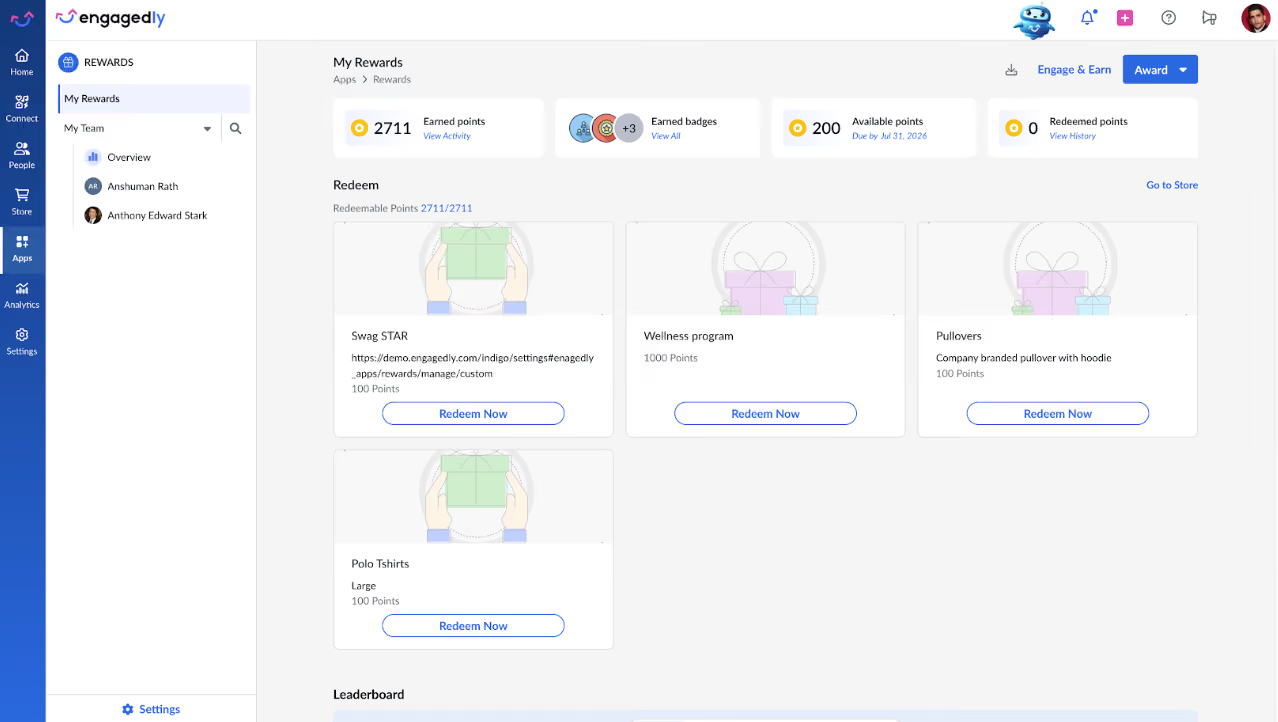
The social feed is a great choice if you want to drive high-visibility appreciation while keeping the granular moderation tools you need for corporate compliance. Standard peer shoutouts and daily kudos flow through a public feed that captures informal recognition as it happens. As an admin, you can maintain oversight by moderating inappropriate content and pinning key company news, while letting automated triggers handle recurring milestones like work anniversaries and birthdays.
We also like how recognition flows through points and badges. As managers give discretionary badges for good work, the system awards them when employees complete defined actions. You can let employees collect points and redeem them for gift cards, Tango cards, or Switchfly experiences. The leaderboards, per our tests, are useful for ranking people by accumulated points, as they create a quantifiable system that clarifies which behaviors earn points.
However, the platform lacks offline recognition functionality, which might present a challenge for organizations relying on deskless or offline operations.
On integrations: Engagedly connects to Tango and Switchfly for reward fulfillment, but lacks the Amazon integration you’ll find in some competitors like Awardco. With 31 native integrations and only 10 covering payroll or HRIS, you'll likely need API connections to stitch recognition data into your broader talent stack.
Considering that Engagedly’s mobile app has a 3.2/5 rating, the platform may not satisfy the mobile-first experience some users expect.
Custom pricing.
Best For
Organizations consolidating performance management, learning, and recognition into a single platform, where both social acknowledgment and point-based rewards align with employee engagement strategy.

ThriveSparrow
What really stood out to us was how ThriveSparrow turns everyday kudos into a way to reinforce company values. Add flexible global rewards, native communication tool integrations, and multilingual capabilities, and the platform feels particularly useful for global, distributed teams.
PROS
- Kudos automatically connect recognition messages to organizational values based on keywords.
- Gift card rewards support 100+ countries with region-specific catalogs.
- Slack, Microsoft Teams, and Google Chat integrations bring recognition into everyday workflows.
- Employees can use the mobile app to give and view kudos in 12 languages.
- Reward analytics provide redemption, cash flow, and tax-reporting visibility.
- Offers deep customization, allowing full control over survey questions, rating scales, and visibility settings.
- AI-powered sentiment analysis categorizes qualitative responses into key themes and presents insights in a visually digestible format.
- Granular data filtering by department, tenure, or location for precise trend analysis.
- Transparent pricing starting at $2 per user per month.
- Strong integration capabilities.
CONS
- Certain integrations can result in extra charges.
- Admins need a desktop or laptop to configure point rules, cards, and grant limits.
- There is currently no mobile approval workflow for redemption processing.
- Department-level dashboards are still in development.
- Recognition analytics do not yet connect recognition activity with engagement, OKRs, or performance data.
- Some integrations may require an additional cost.
- No dedicated mobile app for admins.
- As a relatively new product, ThriveSparrow may not have the experience of more established vendors.
ThriveSparrow’s Kudos module combines peer-to-peer recognition, manager awards, nominations, and rewards in one platform. During our demo, what immediately caught our attention was the way kudos connect to organizational values. Rather than simply sending someone a “great job” message and moving on, ThriveSparrow can pick up words such as “honest” or “hardworking” and surface the corresponding value, such as integrity. We really liked this idea as it gives everyday recognition a little more meaning and helps HR teams reinforce the behaviors they actually want to see.
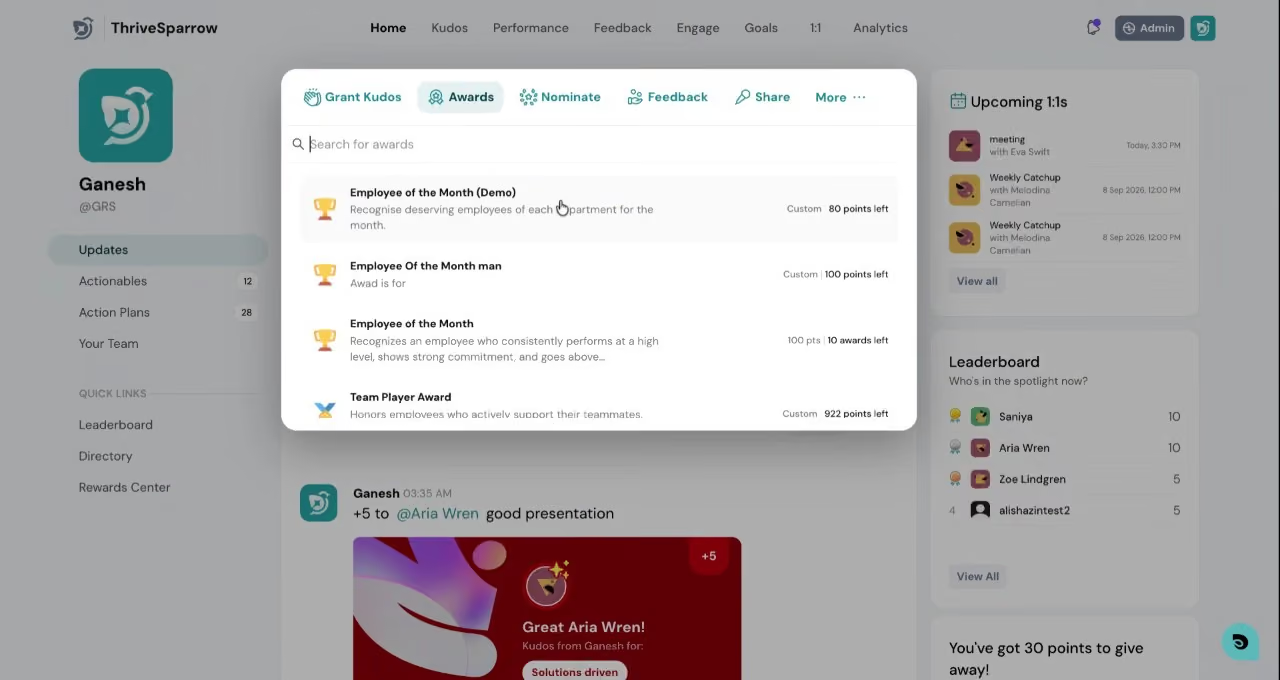
The rewards experience was another highlight for us. ThriveSparrow supports gift card catalogs in over 100 countries, with region-specific options, so there is enough flexibility that global teams don't have to force everyone into the same reward structure. Admins can also decide how many points each award is worth, while employees can redeem points in a few clicks, according to our testing.
We also came away impressed by how much of the employee experience fits into tools people already use. Employees can give and view kudos from the mobile app, choose their preferred language from 12 native options, and interact with recognition through Slack, Microsoft Teams, and Google Chat. During the demo, we watched a Slack recognition appear in the ThriveSparrow feed, while Slack reactions could also contribute to points. That's the sort of integration we like because recognition doesn't feel like another HR task employees have to remember to log into.
But ThriveSparrow isn't quite as polished for administrators. Configuration for point rules, cards, and grant limits still requires the web experience, and there isn't a mobile approval workflow for processing redemptions. We also found ourselves wanting more visibility at the department level. Organization-wide dashboards are available, but department-level views are still in development, which could be frustrating for larger organizations where a single company-wide recognition feed can become noisy.
The biggest missing piece, though, is what happens after recognition data is collected. The current analytics do a good job with rewards and redemption, including department-level redemption tracking, cash flow visibility, tax-related reporting, and wallet forecasting. What they don't yet tell us is whether recognition is actually improving engagement, performance, or progress toward OKRs. ThriveSparrow has plans for broader executive analytics, but for now, the platform tells you quite a bit about where rewards are going without fully connecting that activity to the bigger employee picture.
- Kudos: $2/employee/month
- Engage: $3/employee/month
- Kudos + Engage: $4/employee/month
All plans are billed annually, with monthly billing options available upon request.
Limited offer we spotted: Organizations with at least 200 employees receive Thrivesparrow’s first 100 seats for free (promotion valid through May 2027).
Best For
Global organizations seeking flexible employee recognition, region-specific rewards, and integrations with their existing communication tools.
Achievers
Achievers claim to work at global scale, and our testing bore that out: 30+ languages, 200+ countries for rewards, in-flow-of-work integrations. Adoption rates were consistently higher than lighter platforms. Their approach is relentless focus on friction reduction. Nothing flashy, but for global enterprises, the thoughtful localization and integration work.
PROS
- Exceptional global rewards coverage with localized vendors and equitable experiences across 200+ countries.
- Industry-tailored recognition campaigns, from safety protocols in manufacturing to ERG support in corporate environments.
- Integrates natively with major platforms like Workday, Microsoft Teams, Slack, Outlook, and LinkedIn.
- Mobile-first experience designed for frontline and deskless workers with QR code and app-based recognition.
- Robust manager enablement tools and AI-based nudges that prompt timely, values-aligned recognition.
- The concierge rewards service allows users to redeem points for anything legally purchasable.
- Global reward fulfillment via localized vendor partnerships.
- The concierge redemption option lets employees choose virtually any legal reward.
- Swag, gift cards, cash-like options, and experiences available in a single platform.
- Budget controls and compliance tools support enterprise-wide reward governance.
- Highly flexible catalog that adjusts based on location, language, and user permissions.
- Native integrations with Workday, Slack, Outlook, and several other enterprise platforms.
CONS
- Some users report slow load times and bugs, including recognition drafts disappearing mid-submission.
- Reward catalog navigation can be unintuitive, making point redemption a bit tricky for some users.
- Achievers is not a good fit for companies with fewer than 500 employees.
- Reward catalogs vary by region, with some users wishing for more variety.
- Some users noted that the redemption layout could be confusing, or they experienced difficulty locating specific reward items.
- Targeting organizations with 500+ employees, Achievers may be too costly for smaller companies.
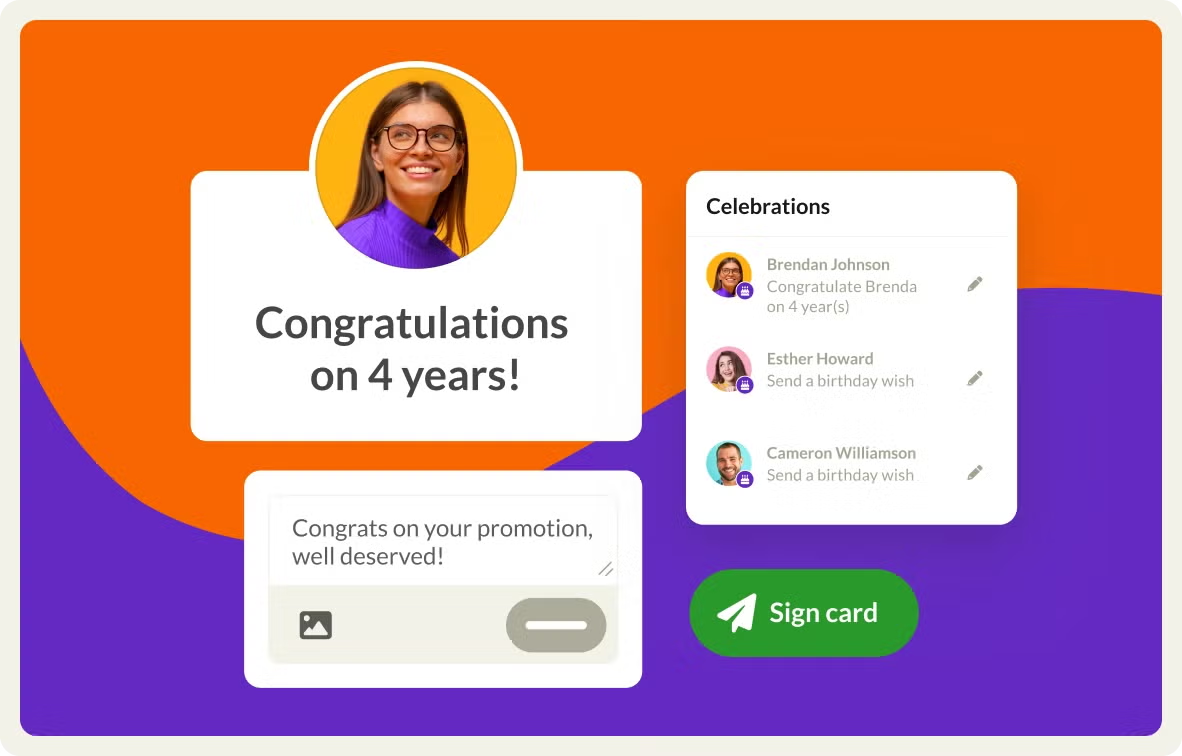
Achievers stands out as a mature, globally focused employee recognition platform with a sharp emphasis on usability, cultural alignment, and high program adoption. In our hands-on demo, the product felt intuitive from the start, with thoughtful design choices for both admin and employee users.
What really elevates Achievers is how simple recognition fits into the flow of everyday work. Employees can send recognition from Microsoft Teams, Outlook, Gmail, Workday, or the mobile app, and the system supports more than 30 languages and flexible approval paths. According to Achievers, the platform sees nearly double the industry-average usage rates — a claim we were unable to independently verify but found plausible given the in-flow-of-work integrations we observed during testing.
The reward experience is equally strong. Achievers’ global marketplace offers localized gift options without markups, plus a well-executed drop-ship model that works smoothly across regions. We also liked that the concierge service gives employees the freedom to use points on meaningful, personal purchases, rather than just whatever happens to be in a catalog.
Admins get a robust toolkit as well: detailed analytics dashboards, campaign-building tools, manager nudges, and deep integrations into systems like Workday and Tableau. Data flow felt clean and reliable, which is critical for enterprise-scale programs.
That said, user feedback presents a more mixed view of performance. Some employee users we surveyed reported encountering bugs. And while the rewards are plentiful, a few also mentioned that the redemption process wasn’t as straightforward as they expected.
Still, for mid-sized to large organizations that want a recognition program employees actually use, and one that supports meaningful, customizable rewards across countries, Achievers remains one of the most adoption-driven platforms available.
Five Star Bank, General Motors, Sobeys, Discover, Workday, Samsung, GM, Dyson, CVS Health, Panasonic, Scotiabank.
Achievers offers custom pricing based on company size, location, and feature needs. The platform is typically available to companies with 500+ employees and can be configured for monetary or non-monetary recognition programs. You’ll need to request a demo to get an accurate quote.
Best For
Achievers is best for global enterprises (500-5,000+) needing recognition that works across regions, languages, and currencies with documented track records in complex environments.
Kudos
Kudos implements structured governance without feeling heavy-handed. Admins define recognition rules, but users don't feel restricted. Message refinement (AI helps with clarity) was thoughtfully done. Manager accountability dashboard makes recognition a visible responsibility. The balance between structure (preventing gaming) and freedom (enabling adoption) was executed well.
PROS
- Simple, intuitive interface for giving recognition and appreciation to colleagues
- Robust mobile app with near-full feature parity with the web version
- Available in 10 languages in addition to English
- Recognition messages can include redeemable points, making appreciation both meaningful and actionable.
- Admins can offer gift cards, merchandise, experiences, donations, or company swag tailored by location, team, or budget.
- Combines data on morale, recognition, churn, and loyalty into a digestible culture score.
- Pulse Surveys automatically generate executive summaries, saving HR time and improving visibility.
- SOC 2 Type II and ISO 27001 certifications make Kudos viable for enterprise buyers.
- The platform is available in 11+ languages with regional reward options.
CONS
- Monthly point allowance for recognizing others is widely considered too low
- Reward redemption process is cumbersome and not user-friendly
- Pricing is high for small businesses and no free trial is available
- No free trial or sandbox, so buyers must book a demo to access the platform.
- Average app store ratings of 3.2/5 and hasn’t been updated since mid-2024.
- Requires upfront configuration, making it not ideal for teams without internal admin capacity.
- If employees don’t use the recognition system regularly, culture insights lose depth.
Kudos stands out in a crowded recognition market by giving employers deeper control over how recognition happens, not just how it looks. In our most recent demo, we saw how admins could define rules that determine who can recognize whom, what types of messages are available, and how often employees are nudged to participate. This kind of rule-based architecture makes the system feel purposeful and aligned with company culture rather than superficial or performative.
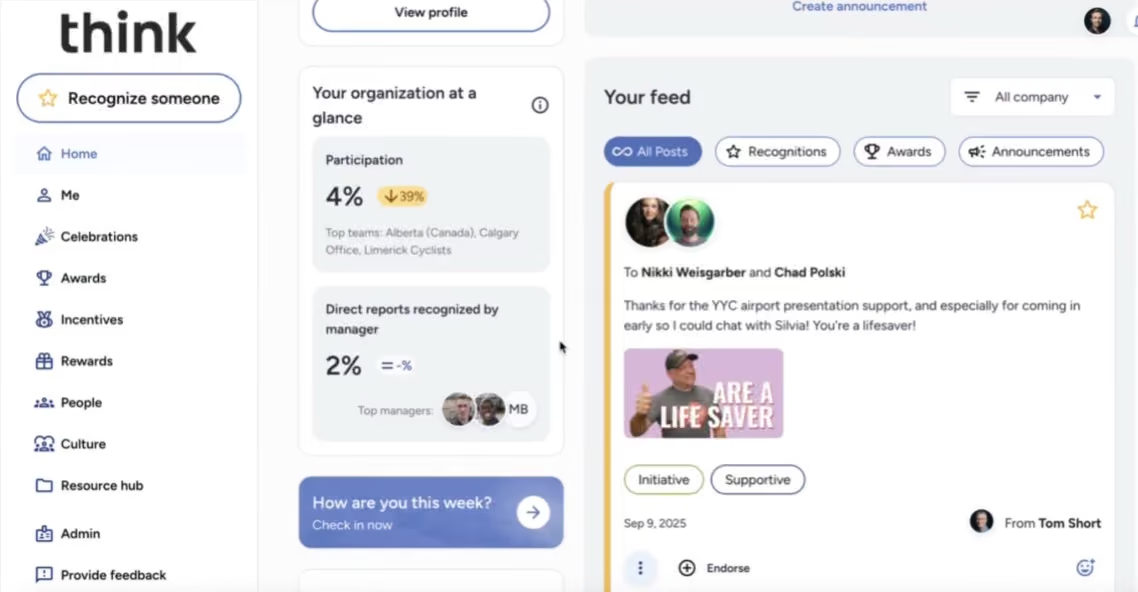
The recognition interface itself is clean and user-friendly. Employees see personalized prompts encouraging them to send recognition if they haven’t done so recently, and manager dashboards highlight team members who may be overlooked. This adds a layer of accountability to what is often a passive feature in other tools. The option to send e-cards or bundle recognition with announcements also helps integrate praise into the company’s daily rhythm.
One thoughtful feature we appreciated was Kudos’ built-in message refinement. When writing recognition, users are prompted with AI-powered suggestions to improve tone or clarity. This lowers the barrier to writing more impactful notes and reduces the risk of vague or generic messages, especially in peer-to-peer shoutouts.
Despite these strengths, there are a few limitations worth noting. Kudos doesn’t offer a free trial or sandbox, so you’ll need to book a demo and go through onboarding to experience the platform. The setup process itself can be configuration-heavy, particularly for teams wanting to segment permissions or align recognition types with internal values. The mobile experience is serviceable but dated, with the apps rated at 3.2 out of 5, and updates absent since mid-2024.
It’s also worth understanding that Kudos leans toward recognition that is tied to a points-based reward system. While symbolic appreciation is certainly supported, many of the platform’s workflows are optimized around assigning value and tracking redemption. For companies focused on purely intrinsic or non-monetary recognition, this could feel like a mismatch without customization.
Kudos counts thousands of businesses among its customers, including enterprises like MTN, ATCO, Bulgari, and DHL (per company-provided data).
Kudos’ pricing starts at $3.25 per user per month for organizations with at least 500 employees. However, its actual pricing is flexible, based on the number of user seats needed and the length of the contract.
Best For
Kudos is best for large diverse workforces (500-5,000+) needing structured recognition with controls that prevent favoritism while maintaining usability.

We use Kudos extensively for projects within the company. During projects, employees can lose confidence or become frustrated, so this tool helps enhance their mood and confidence. It is used to build up the team during busy times, keeping the forward momentum. Recognizing hard work and a positive attitude during chaotic times reassures employees that their efforts are appreciated and worthwhile.

Goal tracking is a great feature, making it easier to monitor employees' progress. Recognition tools motivate employees to reach their goals, which is a favorite aspect of the program. The user-friendly interface ensures a seamless process every month.
Our organization purchased Kudos to provide a seamless way to recognize and reward employees, enhancing morale and productivity. It allows recognition not only from direct managers but also from peers, ensuring employees feel valued and acknowledged. This tool helps to recognize the work and attitude of employees even when management is not always available to observe. By using this tool, we aimed to build confidence, foster a strong sense of character, and create a positive workplace environment. I have been using this tool for several months.
The limited number of kudos available each month is less than ideal, as some months require more recognition. This limitation can lead to some employees feeling their work wasn't good enough or acknowledged. The gift catalog lacks variety, which could be improved to appeal to a broader range of employees.
Kudos offers a variety of achievement levels for employees, unlike others that only have uniform levels of recognition. This differentiation helps employees feel unique and valued for their efforts. The support provided by this program is exceptional, saving time and resources for IT and HR teams by offering readily available assistance.
Consider how you plan to utilize the program within your organization. Evaluate the cost, which is reasonable and provides great value for building employee confidence. The user-friendly nature minimizes the need for extensive troubleshooting. The adaptability of the reward system is excellent, offering different levels and options for recognition. Ensure the tool helps track team wins and recognizes individual achievements, a crucial factor in its effectiveness.
Kudos has become more flexible in terms of rewards and their utilization. Its user-friendly design and comprehensive features make it a valuable asset for all companies.
Kudos is ideal for companies looking to build their employee base and drive confidence among their current employees.
Companies in highly competitive fields such as sales or cold calling might not benefit as much from Kudos. These sectors are typically driven by commission, which serves as its own reward. Additionally, in time-based structures, using this tool might encourage quantity over quality, potentially compromising customer service.

Terryberry
We noted Terryberry treats recognition as part of broader employee experience—integrated with rewards, wellness, service awards. Physical award customization (trophies, jewelry, engraved items) means recognition can be tangible in ways digital-only platforms can't. A hundred-year history in the space signals they've tested what works at scale. No innovation in the traditional sense, but thoughtful integration of pieces that usually stay separate.
PROS
- Combines rewards, incentives, and wellness tracking in a single platform
- Supports custom company merchandise as part of the recognition experience
- Customer service consistently praised for responsiveness
- Thorough implementation process with internal & customer testing, and user training
- Customized physical goods as employee rewards
- Wide range of employee engagement features, including rewards, incentives, and a wellness tracker.
- Customer support and account management at Terryberry are quite good. Their reps stand out for being very responsive and attentive, which is evidenced by some of the client testimonials we read.
- The implementation process, while six weeks long, is quite comprehensive, and you get tons of help along the way. For instance, the last two weeks consist of internal and customer testing, as well as user training.
CONS
- Interface design feels dated compared to more modern platforms on this list
- No open API currently available
- No free trial offered
- While Terryberry is easy to use, its design could look more modern and sleek.
- No open API available as of this writing.
- No free trial at the moment.
Terryberry offers one of the most comprehensive feature sets we've seen in an employee recognition platform.
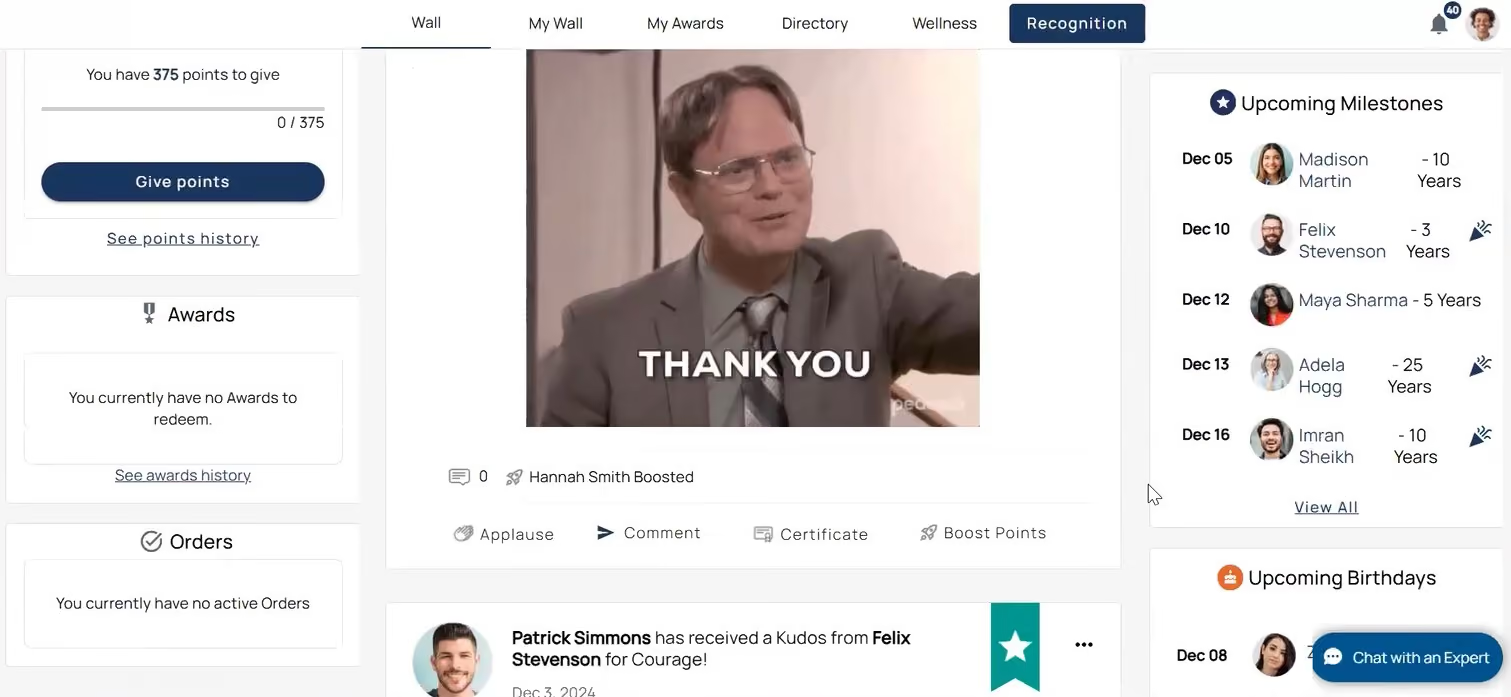
The software provides social recognition tools, employee engagement platform features, a wellness app, service awards and custom jewelry, performance management, incentive programs, and a global rewards catalog.
Thanks to the product demos in December 2023, December 2024, and May 2025, we gained an in-depth look at the platform's expansive capabilities.
With so many features covered in a single call, it was difficult to get a detailed walkthrough of every workflow. For anyone interested in a Terryberry demo, we recommend identifying the specific workflows that are most critical for your needs and asking for those to be covered in greater detail.
It's also worthwhile to explore the employee recognition program’s custom awards offerings. Terryberry can manufacture everything from trophies to belt buckles tailored to your specifications, while also providing the software to identify which employees you want to recognize and reward.
We don't necessarily dislike Terryberry’s UI, although we can't say that it's our favorite. It gives off a dated look, which may impact user experience for teams accustomed to contemporary interfaces. Although it has been a while since the recognition platform announced it would consider launching API integration access, it has still not been released.
Terryberry serves approximately 40,000 customers (per company-provided data, last verified May 2026).
Terryberry offers flexible pricing. You can select specific features of the platform to start with and add more later as your needs evolve. Their basic subscription plans start around $3 per employee receiving an award.
In addition to the subscription costs, Terryberry charges one-time setup fees and an annual administration fee that is calculated based on the total employee headcount and number of reward redemptions processed.
Terryberry has evolved significantly in the past year, adding several new features to enhance employee engagement:
- Advanced analytics: The platform now measures the impact of recognition on employee sentiment, helping organizations refine their engagement strategies.
- AI-powered recognition: New AI tools assist managers in crafting recognition messages that align with company values.
- Integrated wellness and feedback: The "Be Well" wellness program and "Be Heard" survey tools provide a holistic approach to employee engagement.
- Enhanced mobile experience: Improved mobile app functionality supports on-the-go recognition for deskless employees.
- Expanded global reach: Multi-language support and fulfillment in over 150 countries make Terryberry a strong choice for international organizations.
- They recently added Amazon Business as part of their rewards catalogue, although only in the US for now.
Best For
Terryberry is best for large corporations (500-5,000+) wanting a unified platform for recognition, rewards, and wellness, where you want one system managing the entire appreciation and incentive experience rather than juggling multiple tools.

I utilized Terryberry several times a week to set up recognition programs aligned with our company values and goals. Reviewing nominations and approving awards was a regular task, ensuring fairness and recognizing employee achievements. Tracking employment milestones and communicating with employees about their accomplishments and events was also crucial. Periodic surveys were conducted to gather employee feedback, and I frequently analyzed reports and analytics to identify trends and further engage employees.
The creation of rewards programs was straightforward, making it easy to align them with company values. The peer-to-peer "wow" program successfully encouraged employees to recognize one another, fostering a positive and engaging work environment. The wellness program was well-received by staff, indicating its success. Excellent customer service and the user-friendly app, especially for field employees not frequently at desks, were significant advantages.
Our organization was concerned about the high employee turnover rate, with exit interviews often highlighting a lack of morale due to employees feeling unseen and unrecognized. Increasing salaries as a reactionary measure to prevent departures did not effectively address the underlying issue of employees feeling unappreciated. We were also worried about engagement levels and the resulting dip in productivity from disengaged employees. Despite trying numerous team-building exercises and management retraining, the problem persisted. Terryberry seemed to offer a solution by providing ongoing recognition, encouraging exceptional work, boosting productivity, and reducing turnover by enhancing morale. I have personally used it for six months.
The many choices available for employees was somewhat overwhelming, potentially leading to decision fatigue and wasted time. The tool's integration with other HR systems could be smoother, and customization options were not as flexible as desired, particularly concerning integration with external programs.
Compared to other tools I've used, Terryberry stands out for its user-friendly interface and exceptional customer service. It focuses less on gamification, favoring a points system over cash rewards, which aligns better with our goal of providing added rewards rather than extra compensation. This approach seems more appropriate for recognition software.
It's essential to consider whether your employees are likely to adopt and appreciate this tool. High-income professionals with demanding roles may show less interest in the rewards, so understanding your staff's preferences is crucial. Implementation is straightforward, but launching the program requires commitment. Additionally, be mindful of potential issues like perceived favoritism and have strategies ready to address them.
Terryberry has enhanced its mobile app, making it more accessible for employees regardless of their location. Improvements to the interface's navigation have also made the tool more user-friendly over time.
Terryberry is well-suited for remote or geographically dispersed workforces, industries with high turnover at the entry-level, large companies, and any organization looking to boost employee engagement, especially in roles that are repetitive or routine. This tool can help employees feel more recognized and engaged.
For very small organizations with fewer than 20 employees, Terryberry might not be as effective due to a small pool of participants and potential repetition of rewards. Additionally, highly compensated employees with very busy roles may not find as much value in the type of rewards offered.
What is Employee Recognition Software?
Employee recognition software is a digital tool designed to help organizations implement employee recognition program ideas, acknowledging teams’ and individuals’ achievements and contributions in a structured and meaningful way, thereby fostering a culture of appreciation.
Compare All Options and Prices
Best Free Employee Recognition Software
Some of you might be wondering whether there is any free employee recognition software. The short answer is yes. Although not common, there are a few free employee recognition apps available, including:
- Matter: Free plan features Kudos recognition, template library, Slack & Teams integration.
- Guusto: Free plan supports sending and redeeming rewards, recognition mobile app, and print options.
- Wrenly: Free plan includes 3 surveys per month (up to 50 responses), 5 suggestion box posts per month, 10 recognitions per month, and 1 admin account.
- BuddiesHR: Free plan provides access to basic recognition features for up to 10 users.
Top Employee Recognition Platforms Features
Employee recognition tools have many features to help build a strong company culture and employee engagement, including:
- Peer-to-Peer Recognition: Allows employees to recognize each other’s contributions, creating a supportive and collaborative work environment. Nectar is, for example, one of the top employee reward and recognition program companies for peer recognition through personal employee awards and appreciation quotes.
- Manager-to-Employee Recognition: Gives managers the tools to recognize their team members’ achievements, reinforce positive behaviour, and boost morale. Platforms like Reward Gateway and Bucketlist let managers offer timely and meaningful recognition with many options to choose from.
- Social Recognition: Publicly recognizing achievements helps form an appreciation culture. Motivosity’s social recognition, for instance, creates a community-focused environment where peers can view and engage with recognition.
- Customizable Rewards Catalog: This allows employees to choose the perks and rewards that mean something to them, from custom eCards to charitable donations. For example, Guusto offers extensive reward options, including company merchandise and experiences you can redeem at over 60,000 stores worldwide.
- Automated Milestone Celebrations: Automated milestone celebrations are a way to celebrate significant events like work anniversaries and birthdays. Nectar is one of the employee recognition vendors that make milestone celebrations easy with native automated service awards and birthday recognitions.
- Integration with Team Collaboration Tools: Recognition can be integrated into daily workflows through platforms like Slack and Microsoft Teams. Matter serves as a perfect illustration—the employee recognition tool lets employees recognize others directly within Slack and Teams, so they can acknowledge them in real-time.
- Mobile Accessibility: Employee recognition programs are accessible to remote or deskless workers through mobile-friendly platforms. Kudos is one of many vendors that have mobile-optimized apps for on-the-go recognition program participation.
- Reporting and Analytics: Gives you detailed insights into program performance so you can measure impact and adjust. For instance, Motivosity has real-time analytics and dashboards to see engagement and recognition trends, all of which combines to empower your rewards and recognition strategy.
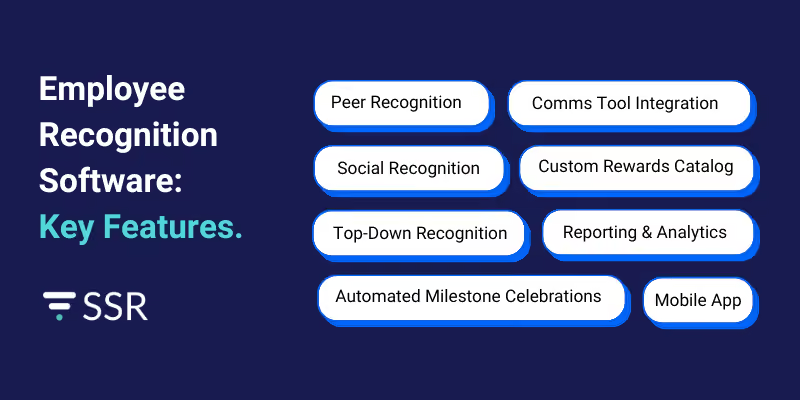
Benefits of Using Employee Recognition Platforms
Having a recognition program in place is important to both your company’s human and financial capital. Recognition software can bring numerous benefits, including increased employee engagement, access to valuable data, and automated recognition processes.
- More Engaged Workforce: Employee recognition programs make it easier for employees to engage with each other in ways that align with your company’s values and work culture[1]. Research shows that higher engagement is great for the bottom line, too: organizations with high employee engagement levels are 21% more profitable [2].
- Better Team Well-being: Regular recognition makes employees feel valued and appreciated, which reduces stress and improves mental health. According to a recent survey, 69% of employees say their sense of well-being would improve if they were recognized or thanked more often by their manager. [2].
- Improved Employee Retention: Recognized employees are more likely to remain with their employer. Statistically, organizations with recognition programs experience 31% lower voluntary turnover compared to those without such programs [2].
- Attracting Top Talent: Unsurprisingly, a recognition culture makes an organization more attractive to future employees. And organizations that put employee recognition first are in a better position to attract top talent looking for a positive work environment.
- Actionable Employee Data: The best employee recognition platforms often come with engagement measurement capabilities (e.g., pulse surveys), which provide you with all sorts of useful metrics. This data will help you ensure that recognition plans are being executed within a specific budget and time frame and that rewards are fairly distributed.
- Streamlined Recognition Processes: Automatic reminders of work and personal anniversaries, competitions, and monthly awards not only bring consistent recognition across all levels of your business but also streamline the recognition operations for your HR employees.
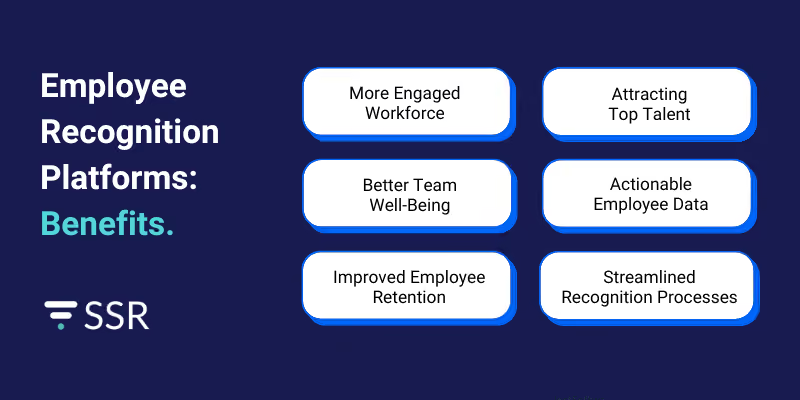
Digital Recognition Platform Pitfalls
Research and real workplace experience point to three recurring pitfalls: badges that can replace real appreciation, praise that doesn't always turn into real support, and reward criteria narrow enough to push people toward performing "company values" instead of just doing good work[3].
- Badges are easy. Real appreciation isn't always what follows. Many platforms are built around points, badges, and leaderboards. That's convenient for managers, tapping a button can feel quicker than taking a moment to say something meaningful, but it risks turning recognition into a game rather than a genuine "thank you." It can also miss the people behind a win who aren't as visible: the coworker who covered a shift, the quiet mentor, the person who fixed a problem nobody noticed.
- A pat on the back can ring hollow without follow-through. Many tools are designed to keep recognition low-cost: an e-card, a small voucher, a nice message, without a built-in link to raises, promotions, or expanded opportunities. That's not necessarily a problem on its own, but it can become one if leadership starts treating the software as a substitute for harder conversations, using it to check the "employee appreciation" box instead of backing it up with real support. Some employees have described recognition programs this way, as more about PR for leadership than genuine appreciation, which works against the trust these tools are meant to build.
- Tying recognition too tightly to "company values" can backfire. Some platforms are configured to reward narrow, predefined behaviors like "innovation" or "culture fit." That can unintentionally teach people to perform those traits rather than express their own priorities. It can get harder still if managers keep recognizing the same easily observable examples of "excellence," since that standard tends to keep shifting. Over time, that dynamic risks quiet burnout rather than the confidence the program was meant to build.
Recognition software isn't inherently a problem, it can genuinely help. It's worth going in aware of where it can go wrong, both in how it's built and how your team ends up using it, so you can build in the real support to back up the badge.
Employee Recognition Software Pricing
Employee recognition platforms generally cost between $3–$7 per employee per month or a flat annual fee of $2,500–$4,000 for smaller teams, with many vendors offering free starter tiers and custom pricing for larger enterprises. Overall, most organizations can expect annual costs to range from a few thousand dollars for small teams to tens of thousands at scale.
- Regarding pricing models, most employee recognition vendors resort to either the marketplace pricing model (you pay a percentage of your total annual spending) or the per-use-per-month (you pay a flat rate per employee each month).
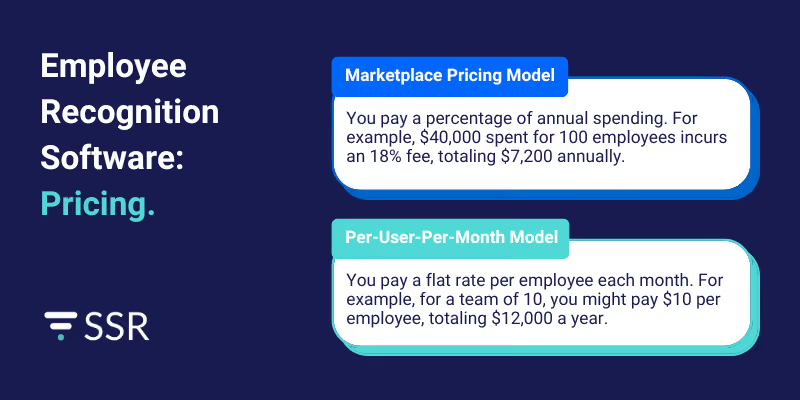
However, before you choose a recognition platform, be sure to ask vendors about extras beyond base subscription costs. Some vendors may charge rewards fees and markups, as in they add a percentage on gift card or merchandise redemptions. Additionally, many require a minimum monthly or annual fee as a minimum commitment. Examples include:
- Nectar: $4,000 annual commitment, with per-employee pricing in the $5–$6 range.
- Guusto: Lite plan at $125/mo; Essential starts at $4 per sender seat and $0.7 per member seat, with a $200/mo minimum; Premium starts at $5 per sender seat and $1 per member seat, with a $500/mo minimum.
- Terryberry: Starts at ~$3 per rewarded employee, plus setup fees and an annual admin fee based on employee count and redemption volume.
- Kudos: Starts at $3.25 per user/mo but requires at least 500 employees.
How to Use Recognition Platforms Effectively
Integrating the platform with the rest of your tech stack, frequently measuring the impacts of implemented recognition programs, automating workflows, and maximizing peer-to-peer recognition opportunities are all key best practices for HR specialists working with employee recognition programs. Of course, all this is made simpler if you also make an effort to secure management buy-in.
- HR Integration: Before buying a recognition platform, make sure you have the right HR software integrations. Onboarding one that doesn’t work well with your existing tech stack will only hamstring your business. At an absolute minimum, any platform you pick should integrate with your company’s Human Resource Information System (HRIS) as well as team communication tools.
- Regular Program Checkups: Not all employees respond to recognition in the same way, so it’s well worth spending time performing regular checkups to determine whether the current recognition program works and what types of recognition resonate with different employees to make necessary adjustments.
- Recognition Automation: Automating employee recognition where appropriate is another fantastic time saver and likely one of the most popular features of this type of software among HR pros. As mentioned above, even automating simple reminders like work or personal anniversaries frees up significant time.
- Peer-to-Peer Engagement: Peer-to-peer recognition is arguably the most important employee recognition type. Employees should have a say in the rewards and recognition that motivate them the most. Your employee recognition ROI will be levels higher if you encourage engagement throughout your organization rather than settling for a top-down tool that delivers information in one direction.
- Internal HR Tech Buy-in: Present a clear plan of action for integration, checkups and automation, and peer-to-peer engagement. Your organization’s decision-makers need to be able to easily understand the return on investment of your time and their money. Once that’s established, they’re more likely to give your HR team the freedom to implement these best practices as effectively as possible.
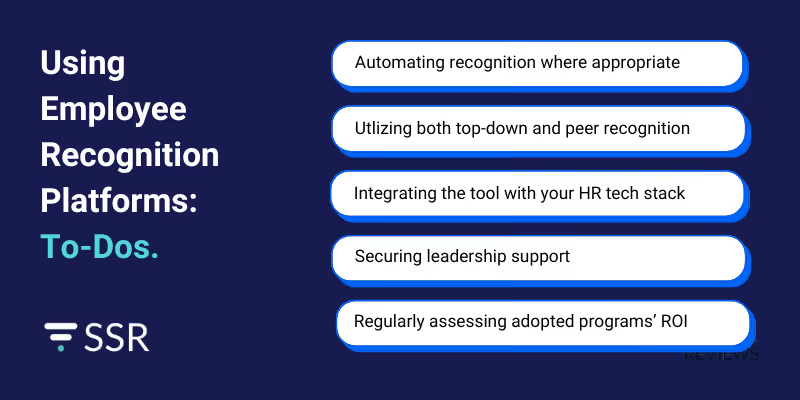
Bonus Tips on Making The Most of Your Employee Recognition Software
When you take the time to thoughtfully recognize employees, it can be a truly powerful way to lift everyone's spirits, enhance your employer brand, and drive better results for your business. Of course, not every recognition effort hits the sweet spot. Sometimes, a little extra planning or regular follow-up can make all the difference, ensuring your good intentions really shine through.
We recently sat down with two recognition practitioners to discuss what's actually working in employee recognition programs in 2026 and what isn't.
In this video:
- Why frontline and hourly workers are the most underserved segment in most recognition programs, and what low-effort changes make the biggest difference
- How recognition directly influences employer brand perception, especially in high-turnover industries like retail, healthcare, and hospitality
- The three most common mistakes companies make when launching a new recognition platform and how to avoid them
- A simple framework for measuring recognition ROI without needing a dedicated analytics team
If you're evaluating platforms for a distributed or frontline workforce, the video is especially relevant.
Employee Recognition on the Front Lines: Support Retention, Employer Brand, and ROI

Employee Recognition Software FAQs
Does employee recognition software actually improve engagement and retention?
When implemented well, yes, but the impact depends heavily on adoption and program design. The most effective platforms make recognition frequent, visible, and tied to company values.
In our research, companies that encourage peer-to-peer recognition and integrate it into daily workflows (e.g., Slack or Teams) tend to see higher participation and stronger engagement signals. That said, software alone won’t fix culture issues. It works best when paired with clear expectations for managers and consistent usage across teams.
What features should we look for in employee recognition software?
At a minimum, most teams should look for:
- Peer-to-peer and manager-led recognition
- Rewards and incentives
- Automated milestones (birthdays, work anniversaries)
- Company values tagging
- Slack or Microsoft Teams integration
- Reporting and analytics
More advanced platforms may offer global rewards catalogs, budget controls, approval workflows, and deeper HRIS integrations.
How much does employee recognition software cost?
Employee recognition software designed for small businesses often costs $2.25 to $40 per user per month, while recognition platforms for global enterprises typically charge a few hundred dollars per user per month and, most of the time, require annual billing.
How do we ensure employees actually use it?
Adoption is one of the biggest failure points for recognition programs. The platforms that perform best are those that fit naturally into existing workflows, rather than requiring employees to log in to a separate system.
Look for tools that integrate with Slack or Teams, make recognition quick (ideally under 30 seconds), and provide gentle nudges like reminders or prompts. Just as important, leaders and managers need to model the behavior. Without that, even the best platform will see low engagement.
What is the best employee recognition software for small companies?
Some of the best employee recognition programs for small companies include Nectar, Guusto, Motivosity, Matter, Bonusly, and Mo. For more information, check out our detailed reviews of these tools.
Data Sources and Verification
- [1] Jo H, Shin D (2025) The impact of recognition, fairness, and leadership on employee outcomes: A large-scale multi-group analysis. PLoS ONE 20(1): e0312951. https://doi.org/10.1371/journal.pone.0312951
- [2] 50 Essential Employee Recognition Statistics
- [3] Hancock, P. (2024). Employee recognition programmes: An immanent critique. Organization, 31(2), 381-401. https://doi.org/10.1177/13505084221098244
- Customer counts, user numbers, and performance claims attributed to specific vendors are sourced from company-provided materials or public websites and were last verified in May 2026. We note where claims could not be independently confirmed.
About the Author


About Us
- Our goal at SSR is to help HR and recruiting teams to find and buy the right software for their needs.
- Our site is free to use as some vendors will pay us for web traffic.
- SSR lists all companies we feel are top vendors - not just those who pay us - in our comprehensive directories full of the advice needed to make the right purchase decision for your HR team.


